Summary

  1. Government will carry out targeted vaccine programmepublished at 12:55 GMT 17 March
    Breaking

    Wes Streeting says the government will begin a targeted vaccination programme for students living in halls of residence at the University of Kent in Canterbury, which will begin in the coming days.
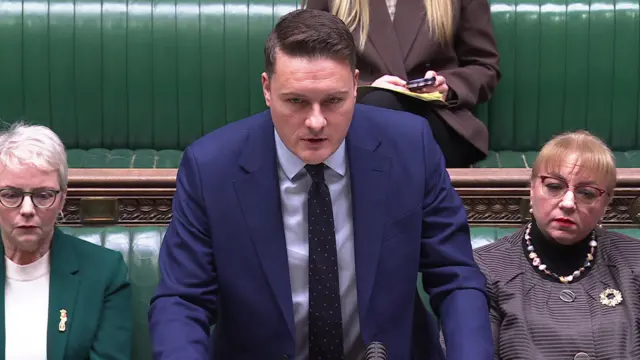
  2. Streeting: MenB requires extended close contact to spread, but can be mistaken for other issuespublished at 12:54 GMT 17 March

    Though "uncommon", the MenB is "a serious and particularly lethal strain" of meningitis, says Streeting.

    The onset of illness "is often sudden", making early treatment "vital", he says, adding that it doesn't spread very easily, with the bacteria passing through extended periods of close contact - such as through kissing, or sharing vapes and drinks.

    The symptoms can be "easily mistaken" for other conditions, even hangovers, he says.

    There are four centres open administering antibiotics in Canterbury for those who think they have been in close contact or attended the nightclub Club Chemistry, Streeting says.

    Anyone worried about a child or a friend should "seek help urgently", he says.

  3. 'Full scale response' in place by Sunday morning, Streeting sayspublished at 12:52 GMT 17 March

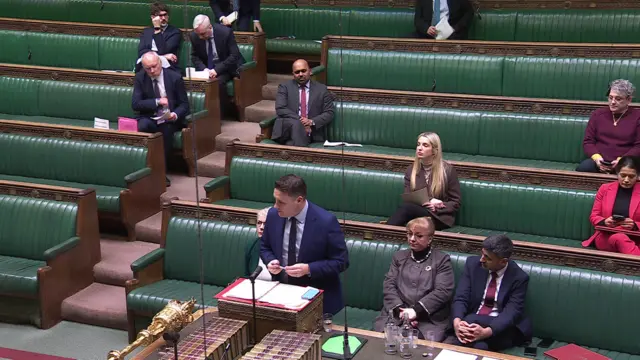
    Wide upwards shot of Wes Streeting at the box speaking to MPs in the House of CommonsImage source, House of Commons

    Streeting says UKHSA stood up a "full scale response" to the outbreak at 10:00 on Sunday, including preparing for antibiotic distribution on campus. They had antibiotics in place by 17:00 and a public health alert was issued at 18:00, he says.

    Even before the public health alert was issued, Streeting adds, young people who had been in contact with those in confirmed cases were being offered antibiotics.

    "I am confident UKHSA acted as quickly and as competently as possible."

    Additionally, there were two cases identified involving sixth formers in Year 13, one of whom has died, the health secretary says, and UKHSA contacted schools early Sunday morning, sending a letter to parents and performing a briefing for schools Tuesday morning.

  4. UKHSA learned of two cases on Saturday, Streeting sayspublished at 12:50 GMT 17 March

    The health secretary turns to the timeline, saying that UKHSA was notified about the first case on 13 March.

    Health officials traced the patients and close contacts, who were offered preventative treatment urgently. Streeting adds that French authorities also alerted UKHSA to a second confirmed case in France on Saturday, from an individual who had attended the University of Kent.

    "Both cases lived in private accommodation and at that stage there were no apparent link between the two," Streeting says.

    He says all those traced were offered precautionary antibiotics and so far 700 doses of antibiotics have been given.

  5. UKHSA will update figures daily - Streetingpublished at 12:46 GMT 17 March

    As of 09:30 this morning, UKHSA has confirmed four cases of MenB and another 11 cases under investigation, Streeting says. The two deaths are associated with this cluster, he adds.

    He says the majority of cases link back to the Club Chemistry nightclub, over the dates of 5, 6 and 7 March "and their associated networks".

    "Club Chemistry is currently closed voluntarily," he says. The health secretary says figures will be updated and made public by UKHSA each day at 09:30.

  6. Streeting says outbreak is 'unprecedented'published at 12:43 GMT 17 March

    Health Secretary Wes Streeting in the middle of speaking to the House of Commons at the front in front of the green benchesImage source, House of Commons

    Health Secretary Wes Streeting has just started giving his statement on the meningitis outbreak to the House of Commons.

    He says that his thoughts are "with the family and friends of those two young people who have sadly died."

    This is an "unprecedented outbreak" and a "rapidly developing situation", he says.

  7. Wes Streeting now updating MPspublished at 12:41 GMT 17 March

    Health Secretary Wes Streeting is now giving a statement on the meningitis outbreak in Kent.

    We will bring you all the latest here and you can watch live at the top of the page.

  8. Health secretary will address MPs on meningitis outbreak soonpublished at 12:21 GMT 17 March

    Health Secretary Wes Streeting will shortly address MPs on the outbreak of meningitis in Kent.

    We will bring you the latest lines from his speech and you can watch live at the top of this page.

  9. UKHSA says 15 cases of meningitis reported, four confirmed to be MenBpublished at 12:13 GMT 17 March
    Breaking

    The UKHSA says that they have been "notified of 15 cases of invasive meningococcal disease with epidemiological links to Canterbury, Kent" as of 17:00 yesterday. That's up from the 13 previously reported.

    They say that all cases have been hospitalised, and four of them have been confirmed through testing as MenB.

  10. 'This is not like Covid', says public health directorpublished at 12:11 GMT 17 March

    A bit more now from Prof Anjan Ghosh, director of public health at Kent County Council.

    He says: "It’s rare to actually have this many cases suddenly happening but what I would also like to reassure people is this is not like COVID - it is not a pandemic where it just spreads like wildfire.

    "It does not spread that easily. It takes quite a lot of prolonged contact for the bacteria to spread from one person to another, because its bacterial and not viral."

    Prof Ghosh adds a lot of work is going on "in the background" to set up antibiotic sites.

    "The priority is to identify contacts of the cases and essentially stop the transmission by prophylactic antibiotics," he says.

  11. What to know about Kent's MenB outbreakpublished at 12:00 GMT 17 March

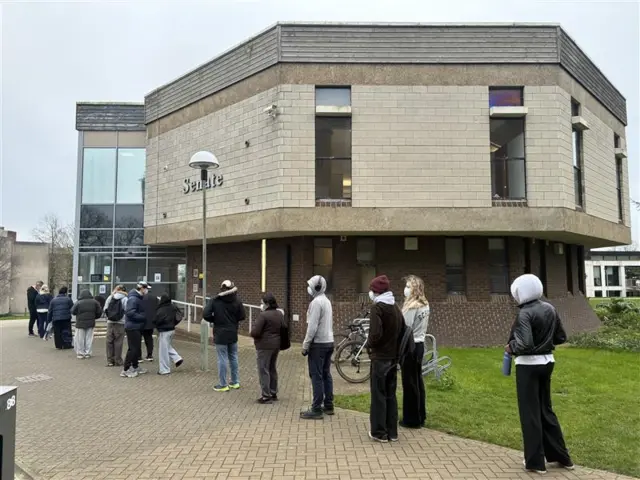
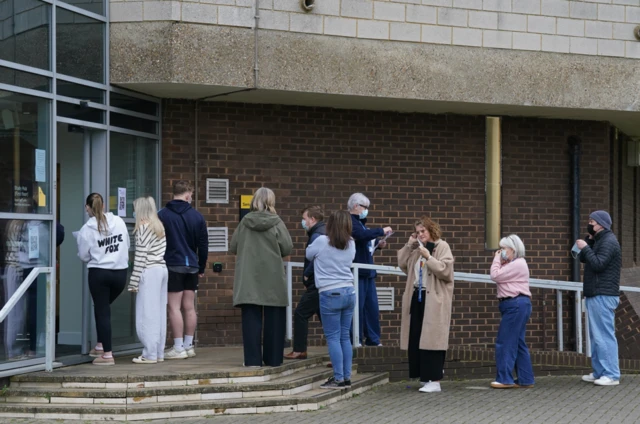
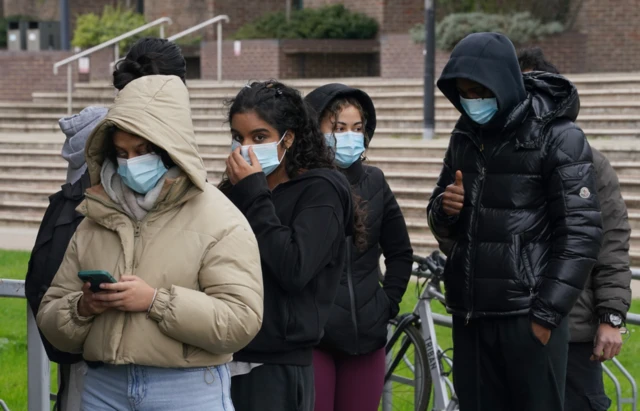
    students queue on the pavement in front of a kent university building in canterbury. some are wearing masks. many are social distancing.Image source, PA Media
    Image caption,

    Students have queued for antibiotics at the univerity

    The UK Health Security Agency (UKHSA) confirmed this morning that the strain responsible for the meningitis outbreak in the Kent area is Meningitis B (or MenB).

    MenB is now the most common strain of bacterial meningitis in the UK, accounting for more than 80% of invasive infections, our health correspondent James Gallagher writes.

    There have been concerns about how quickly officials informed the wider public about the risk of infection - updates were shared on Sunday, a day after first cases were reported.

    But the UKHSA has defended its response to the outbreak, with Dr Gayatri Amirthalingam saying that close contacts were told immediately.

    The new Archbishop of Canterbury, Dame Sarah Mullally, says her "prayers are with the families of the two young people who have tragically died in the meningitis outbreak in Kent", describing the deaths as a "devastating loss".

    The father of 18-year-old Juliette, who died from the meningitis outbreak in Canterbury, told the BBC the family are "beyond devastated and they have no words to express their loss".

    As a reminder, meningitis is an infection of the protective membranes that surround the brain and spinal cord. You can have a combination of symptoms and the infection can be serious if not treated quickly.

  12. Students argue 'we were told too late'published at 11:49 GMT 17 March

    Simon Jones
    Reporter, BBC South East Today

    People at the front of the queue on campus for antibiotics this morning tell me they are concerned that they would not have been vaccinated against Meningitis B because of their age.

    Some have also been critical of the response from the authorities, saying they should have been informed about the confirmed cases earlier.

    They were told by the UKHSA on Sunday night, but rumours had been circulating for several days about people being taken ill. Health bosses have defended their response as "swift".

    People queue outside the University of Kent building to get antibioticsImage source, Simon Jones/BBC

    One student said they were "definitely told too late". She said: “We were told, what, Sunday evening?

    "We all had exams this week as well. We found out so late, we didn’t have a chance to buy masks, hand sanitiser or anything."

    Another student said she received an email at 22:00 on Sunday and that until then she "didn't know that people had died or that it was that serious".

  13. Should parents keep their children out of school?published at 11:37 GMT 17 March

    Vicky Castle
    BBC News

    There have been many questions from parents about whether to send their children to schools in the area.

    We heard a little earlier from Professor Anjan Ghosh, director of public health at Kent County Council, who says it is "natural" that there will be anxiety.

    But he also tells Radio Kent that unless you have been in close contact with someone with meningitis, such as in a household, sharing a dormitory or utensils, then there is "no reason to worry".

    He says: "I can understand why if I was a parent I would want to keep my child safe but there is no reason, unless there is some specific instruction from that school to not send your child to school."

  14. Health secretary to address MPs at lunchtimepublished at 11:23 GMT 17 March

    Health Secretary Wes Streeting will address MPs in the House of Commons at around 12:30 today.

    According to the parliamentary authorities he will make a statement on the "meningococcal disease outbreak". We will bring you the key lines from what he says.

  15. Students at University of Kent petition to close campuspublished at 11:21 GMT 17 March

    Students queuing for antibiotics outside a building at the University of Kent in Canterbury.Image source, Gareth Fuller/PA Wire

    A growing number of University of Kent students are calling for the temporary closure of the campus, saying they no longer feel safe attending in‑person exams and large gatherings during the meningitis outbreak.

    A petition circulating today argues that continuing face‑to‑face exams and activities is putting students in a difficult position by forcing them to choose between protecting their health and risking academic consequences.

    The petition says students feel anxious and claims the current setup doesn’t reflect the seriousness of meningitis and sepsis. It says universities have a responsibility to take extra precautions when their own community has already been seriously affected.

    They want the university to take what they see as a precautionary step, giving them reassurance that their wellbeing is being prioritised - rather than feeling they must “pick between staying safe and staying on track”.

    The University of Kent says the safety of students and staff is its "highest priority", but based on UKHSA guidance its campus "remains open".

    It says : "We recognise that this is a very sad and worrying time for our community and we are doing everything we can to offer advice and support."

    The university says it is a "regional" matter being led by the UKHSA.

    It adds known contacts of existing cases have been contacted, students are being offered antibiotic treatment and it will continue to issue updates.

  16. Archbishop of Canterbury says her 'prayers are with families' of two who diedpublished at 10:56 GMT 17 March

    Close up of Archbishop of Canterbury Dame Sarah Mullally. She has on glasses and is tilting her head and looking over her shoulderImage source, PA Media

    The Archbishop of Canterbury Sarah Mullally says her "prayers are with the families" of the two people who have died from meningitis in Kent.

    "My heart goes out to them in their devastating loss," she says in a statement.

    "I’m praying too for all those who’ve been affected by the outbreak, and for everyone working so hard to care for them and protect local communities," she adds.

  17. University students queue for antibiotics amid outbreakpublished at 10:51 GMT 17 March

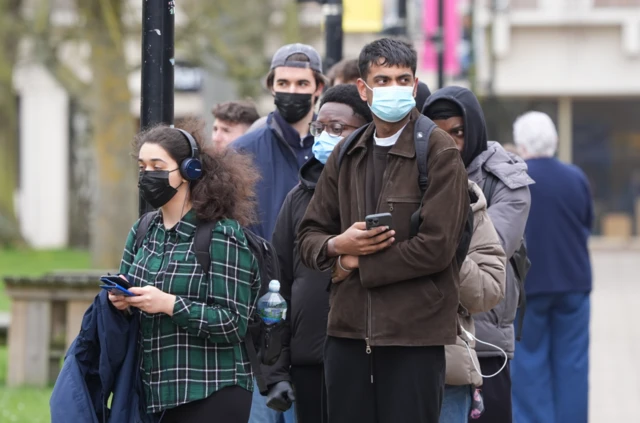
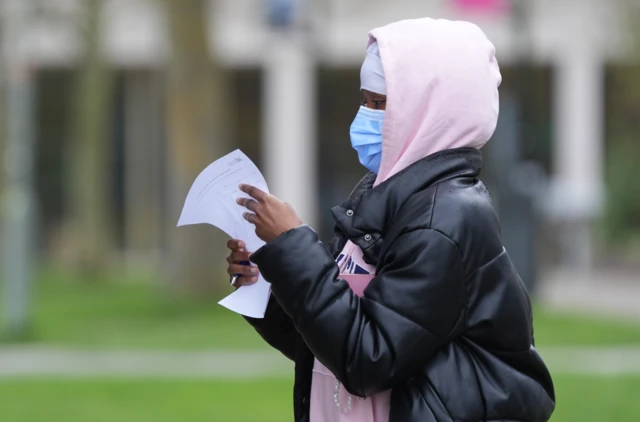
    Antibiotics have been offered to people who visited Club Chemistry in Canterbury on March 5, 6 or 7, sparking queues at a pop-up centre on the University of Kent campus.

    Students wearing face masks queue outside a university building to collect antibioticsImage source, PA Media
    Students wearing face masks queue outside a university building to collect antibioticsImage source, PA Media
    Students wearing face masks queue outside a university building to collect antibioticsImage source, PA Media
  18. How can you know when a rash is meningitis?published at 10:37 GMT 17 March

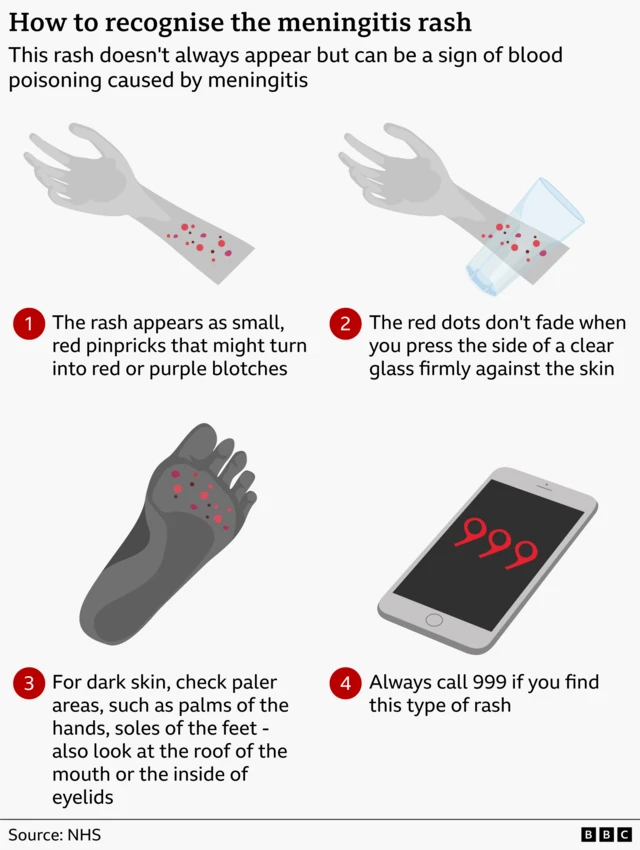
    Meningitis symptoms can include a rash, which the NHS says "usually starts as small red pinpricks before spreading quickly".

    Here is how it can be identified:

    An infographic titled “How to recognise the meningitis rash.” It explains that the rash may signal blood poisoning caused by meningitis. The graphic shows an arm with small red pinprick spots. Step 1 notes that the rash appears as tiny red dots that may develop into red or purple blotches. Step 2 illustrates a clear glass being pressed against the rash, with text saying the spots do not fade under pressure. Step 3 shows a dark‑toned arm with highlighted areas, advising that on darker skin the rash is best checked on paler areas such as the palms, soles of the feet, the roof of the mouth, or inside the eyelids. Step 4 shows a phone displaying “999” and instructs to call emergency services immediately if this type of rash is present. Source: NHS
  19. 'Just makes sense to take precautions'published at 10:23 GMT 17 March

    Nick Johnson
    Reporting from Canterbury

    Westgate Hall in Canterbury City Centre is usually used for markets, fairs and the Canterbury Wine Festival.

    In what feels like a throwback to the Covid vaccine days of 2020, today the venue, is a pop-up antibiotic clinic, open to those in the area who are concerned they may have come into contact with meningitis.

    The number of people arriving is small, they’re mostly between the ages of 18 and 21, all diligently donning masks before going inside.

    Student Riley McMillan shows me the tablets in blister packaging he’s just been given. “I’m not that worried” he says, “just makes sense to take precautions as I was in Club Chem”.

    A tudent who
  20. 'Difficult' to say definitively whether UKHSA was too slow, says epidemiologistpublished at 10:08 GMT 17 March

    Epidemiologist Paul Hunter says it is "very difficult" to say anything definitive about the speed of the UKHSA's response at the moment, after some raised questions about whether the body has been quick enough to act.

    He tells Radio 4's Today programme it is "not just about informing the public" but is also about making sure GPs and doctors "know there is an increased risk" of the disease, to make them "more likely to take those early symptoms seriously".

    Hunter says when he worked in public health, "we would have gone public at the point that we informed GPs" and, he says, it seems like that might have happened "quicker" than the public was informed in this case.

    Asked whether meningitis vaccines should be rolled out to more people, he refers to the Joint Committee on Vaccines and Immunisations' view and says: "At the moment the cost benefits of such an exercise is not justified. Despite what were seeing at the moment, the disease at the moment is still pretty uncommon."