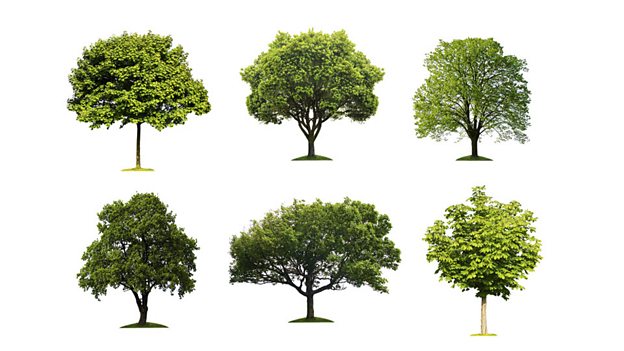
Tim's Blog: Tree Q&A
Question 1: Why would you recommend planting a tree in a garden?
Tim's tip: Well, trees are wonderful. They can give height to your garden, and if you've got fences in your garden, a tree towering over them gives you a range of different heights in the garden area. It's a bit boring if all your plants are at the same level.
In the past, people would often grow trees for the fruit that they bear. Nowadays, most people in this country don't really need to grow their own fruit or other food, but a tree can still be an impressive centrepiece for any garden space.
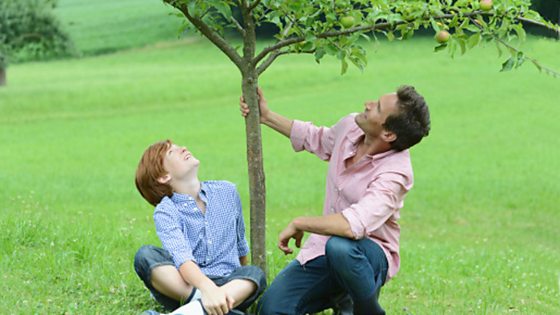
Question 2: So, what qualities do you look for in a tree?
Tim's tip: You want a tree that is going to be right for your garden. Think about what the tree will look like all year round. You want something that is going to be pretty in spring, wonderful through summer, and beautifully coloured as the summer turns into autumn. Something with blossom, fruit and good autumn colour will be an attractive addition to any garden.
You don't want a tree that's going to be too big for your garden, so if you only have a small space you need to think carefully about what to get.
When you go to buy your tree, make sure you check it carefully. A plant might look healthy, but if there is damage around the base then it is better to look for something else. And don't be afraid to take it out of the pot - then you can check how healthy the roots are. Look at the soil in the pot. If it's free from moss, then that's one to go for. You'll know it's fresh and your plant has been looked after.
Question 3: Where is the best place to plant a tree in your garden?
Tim's tip: You might need to stake your tree - supporting it with a kind of wooden pole - but if you plant it in a sheltered corner it should be OK. Next to a wall or sturdy fence is good, but not too close because you want to give the roots of the tree room to spread out. People used to think that a deep hole was the best place to plant a tree, but it's actually better to dig a bigger, shallower hole - again so that the roots have room to grow and aren't fighting to get through hard and compacted soil. You want to make sure your tree has the best chance to grow.

For more information and advice about planting trees, have a look at this original BBC Gardeners' World programme.
Did you spot the three qualities?
Tim said that these three things are important in choosing a tree for your garden:
- appearance - you want something that is going to be pretty in spring and something with good autumnal colour
- size - you don't want a tree that is too big for the garden
- condition - make sure the plant is healthy when you buy it
Language tips: Suggestions, Instructions and Advice
Tim gave lots of suggestions, instructions and advice about choosing and planting trees. Read this information about the language he used to do this. There will be a quiz to test what you've learnt, so read carefully!
1. The verb 'want' + noun + relative clause
We can use the verb want with a noun and relative clause to make an informal suggestion. Make the negative by replacing want with don't want. Tim said:
- You want a tree that is going to be right for your garden.
- You don't want a tree that is too big.
More examples:
You want a garden that is attractive to wildlife.
He doesn't want ta hole that is too deep.
You don't want grass that is cut too short. It looks terrible.
2. The verb pattern: want + infinitive with 'to'
The form is subject + (don't/doesn't) want + infinitive with 'to'. Tim said:
- You want to make sure your tree has the best chance.
More examples:
You want to water those flowers every morning.
He doesn't want to cut that grass too short. It will die.
3. Imperatives
We can use imperative verbs to give instructions. The form for imperatives is the base infinitive without 'to'. The negative is made with Don't + base infinitive without 'to'. Tim said:
- Think about what the tree will look like.
More examples:
Choose a tree that will look nice all year.
Don't forget to check the roots!
4. The phrase 'Don't be afraid + infinitive with 'to'
This informal phrase gives advice about doing something without worrying too much about it. The form is Don't be afraid + infinitive with 'to'. Tim said:
- Don't be afraid to take it out of its pot.
More examples:
Don't be afraid to pick up the tree.
Don't be afraid to cut back dead growth.
To do
Got that? Now let's practise some of these phrases and check your understanding of Tim's blog post - try our green fingers quiz!