Unit 5: Christmas every day
'Have to' and 'must'
Select a unit
- 1 Nice to meet you!
- 2 What to wear
- 3 Like this, like that
- 4 The daily grind
- 5 Christmas every day
- 6 Great achievers
- 7 The Titanic
- 8 Travel
- 9 The big wedding
- 10 Sunny's job hunt
- 11 The bucket list
- 12 Moving and migration
- 13 Welcome to BBC Broadcasting House
- 14 New Year, New Project
- 15 From Handel to Hendrix
- 16 What's the weather like?
- 17 The Digital Revolution
- 18 A detective story
- 19 A place to live
- 20 The Cult of Celebrity
- 21 Welcome to your new job
- 22 Beyond the planets
- 23 Great expectations!
- 24 Eco-tourism
- 25 Moving house
- 26 It must be love
- 27 Job hunting success... and failure
- 28 Speeding into the future
- 29 Lost arts
- 30 Tales of survival
Session 3
Welcome to Session 3. We're going to look at using must and have to in the past and future. We’ll also bring you a top tip for informal speaking.
ክፍለጊዜያት 3 ነጥብ።
0 / 16
- 0 / 4Activity 1
- 0 / 8Activity 2
- 0 / 0Activity 3
- 0 / 0Activity 4
- 0 / 4Activity 5
Activity 3
Language focus: Test yourself
Must and have to - future and past
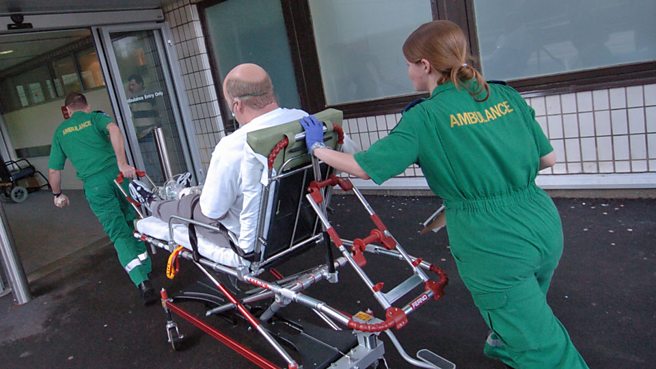
Earlier in this unit we learned how to use must and have to to express obligation and strong necessity in the present tense.
But how do we use must and have to in the future or the past? Here are some example sentences of how to use must and have to. Study them and then try the activity to help you learn the rules.
Examples
John had to go to A&E because he banged his head.
We’ve got to stay home this weekend unfortunately...
I’m really sorry Auntie but we’ll have to miss the family reunion this time.
First we had to stop at the petrol station…
We've got to change the engine oil too.
I didn't have to go to the meeting today after all.
ክንውኑን ይሞክሩ
To do
Here are some sentences all about must and have to. Choose the correct words to complete them.
(1) There is no future or past form of must / have to.
(2) We use will have to / will must to talk about the future and had to / musted to talk about the past.
(3) In the first message, Sarah said "he had to go to A&E", because she was talking about something that happened in the past / future.
(4) Sarah said "we'll have to miss the family reunion", because it's an event in the future / past.
(5) The negative forms are 'didn't have to' (past) and will not having to / won't have to (future).
The answers are at the bottom of the page.
Next
Well done. Now for that top tip we promised.
Answers
(1) There is no future or past form of must.
(2) We use will have to to talk about the future and had to to talk about the past.
(3) In the first message, Sarah said "he had to go to A&E", because she was talking about something that happened in the past.
(4) Sarah said "we'll have to miss the family reunion", because it's an event in the future.
(5) The negative forms are 'didn't have to' (past) and won't have to (future).
የሰዋሰው ክፍለ ጊዜ
If you must do something, it is necessary for you to do it, but this is often your opinion or a rule that you have made yourself.
If you have to do something, it is necessary for you to do it. It’s a law, an obligation or a fact.
If you don’t have to do something, it isn’t necessary to do it, but you can if you want.
If you mustn’t do something, it means ‘don’t do it’. It is necessary not to do it.