
Sally Williams from BBC Inside Out volunteered to work with a group of young adults developing their CVs and interview skills at the BBC in Salford. A day long workshop helped them reassess their key achievements to date. They were part of the Queen’s Young Leaders programme, which is for 18-25 year olds interested in working in the media.
‘You could visibly see their confidence soar as they rewrote their CVs’
As a 15 year old at a large Comprehensive School on Merseyside, I was laughed at by the visiting careers officer when I told her my ambition was to work at the BBC. “You’re a pretty girl, have you thought of being a hairdresser?” she said with a waft of her hand. The BBC, it seemed, didn’t employ people from my background or from my school. The BBC wasn’t “for me”.
It took almost 10 years to realise my ambition when I was accepted on the BBC’s prestigious Trainee Reporter Scheme. It took a further 10 years for me to realise they hadn’t made a mistake and I wasn’t going to be found out and turfed out of the Corporation for having been to the wrong school in the wrong city.
The careers teacher was wrong; the BBC was for me, just as it’s for everyone of us. It’s this sense of injustice and anger that young people could be discouraged from pursuing a career at the BBC that made me sign up to help at the workshop. I feel very strongly that if the BBC is to remain relevant, it must be staffed by people who reflect our audience.
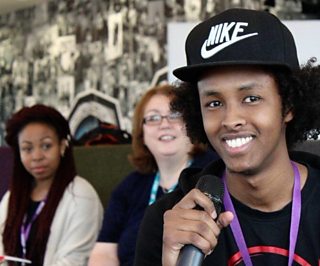
Queen's Young Leaders gaining confidence at the BBC in Salford
The sessions were for young people aged between 18 and 25 years. They came with varying degrees of confidence and experience, but what they did have in common is they all turned up on time ready to learn, and they all wanted to work in the media. The day started with an excellent session led by Alex Dalton who stressed the importance of good storytelling. This was valuable in helping the young people communicate in a powerful way and to really think about their experiences and skills.
The shy young woman next to me who’d insisted she had “nothing special” to offer was soon opening up and telling me how she spent time in her bedroom writing scripts for TV dramas that she hoped would one day be screened by the BBC. Another young man who was a carer for both his parents had set up a radio station at his college and was presenting his own show. He’d been told at the Job Centre to forget any dreams of working in the media.
The highlight for me was when a group of new joiners arrived and described how they got their first break at the BBC. Their tales of grim determination and enthusiasm were a real inspiration to the attendees who were given an opportunity to meet and question them afterwards. The lesson here was that hard work and tenacity really do pay off in the end and our young hopefuls mustn’t be discouraged or take rejection personally.
The afternoon session was really rewarding as it was more hands on. As coaches, we worked one to one with the delegates helping them to realise that their existing skills – from working in kitchens and shops to helping backstage in their local theatre - are transferable and relevant to life in the media where organisation and innovation are key. You could visibly see their confidence soar as they rewrote their CVs and deciphered daunting job descriptions with renewed vigour. I like to think that the young people left really believing that, despite what they’d been told, the BBC is for them as it is for everyone.
BBC Outreach & Corporate Responsibility brings the BBC closer to its audiences - particularly those audiences we have identified as harder to reach - with face-to-face activity, community support and staff volunteering.