
Sharon Stokes sets out her vision for BBC School Report and the exciting developments for its eleventh year.
'We need to engage better with young people, and School Report is at the centre of that'
I have a confession to make. Until I took the job as head of School Report I’d never worked on the project before. I’d never volunteered to be a mentor or got involved with news day, apart from running a piece on a programme I was producing.
So why, after almost 17 years in the BBC, have I got involved? And why do I think other people should too – especially if they never have?
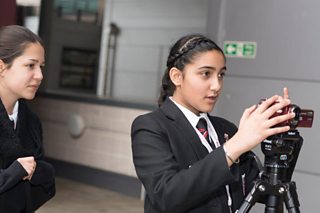
BBC School Report gives 11-16 year olds the chance to make the news for real
I was a teenager when I decided I wanted to be a journalist, after doing a week’s work experience on my local newspaper. I’ve always loved story-telling and meeting people, and finding out about their lives.
I’ve spent much of my career in radio – and have a real passion for personal stories. It’s real people that make news interesting.
Apart from being a journalist, I'm mum to a 14 year old and a 12 year old. Like most people their age they are never off their phones – yet never make a phone call! They’re the generation of Snapchat and Instagram, of downloading and uploading, and even creating their own content.
If I’m honest, they consume very little BBC content (although BBC Sport and Radio 1 still cut through with them both). They’re not unusual for their age.
We know the BBC needs to reach more young people. So how does the BBC engage this generation with our news content?
For the past 10 years School Report has engaged with thousands of 11-16 year olds. It’s a project which gives them a voice and helps to develop their skills. One the BBC’s objectives for this year, set by Director General Tony Hall, is to transform what we do for younger audiences.
And this is a particularly exciting time to engage with this age group. As I say, they don’t just consume content digitally – they create it too. They have plenty to say about the world they live in and the things affecting their lives, and they have stories to tell.
In every department I’ve spoken to since taking this job – they all know they need to engage better with young people. And I see School Report’s future as being at the centre of that. To help engage even more youngsters we’ve made some exciting changes to the project.
Firstly it is now year-round. We’ll be actively seeking stories from young people and engaging them in our content and big editorial moments throughout the school year – starting now.
We’re also opening up School Report so individual children can send us their stories ideas, outside of school. To help us to do this we are creating a School Report Uploader so from next month young people, and schools can send us their ideas directly – as text, video from their phones, audio or pictures.
Later this year we are launching “School Report - The Pitch”. We’ll be inviting schools and young people to send us stories they feel are relevant to their lives, but they feel the BBC isn’t telling. These will be put before a panel of editors from programmes across the BBC who will each commission a story for their output, and work with that young person to bring their story to our audiences.
So why get involved in School Report? Because it’s all about finding amazing stories, inspiring a new generation and engaging them in what we do – while learning something from them. These youngsters are our future audience – and they could be our future colleagues. You might just help inspire another teenager to embark on a career in the media.
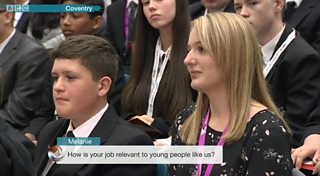
BBC School Reporters at Coventry questioned the Governor of the Bank of England, Mark Carney, today. The event was shown on the Victoria Derbyshire programme on BBC Two and the News Channel.
Read about BBC School Reporters meeting the Governor of the Bank of England, Mark Carney, in a blog by the BBC's economics editor Kamal Ahmed and about Mark Carney's toughest day, on the BBC news website.
BBC Outreach & Corporate Responsibility brings the BBC closer to its audiences - particularly those audiences we have identified as harder to reach - with face-to-face activity, community support and staff volunteering.