
We may not all think of trees as having personalities, but at the Woodland Trust we like to think that every tree becomes as unique as you or I and has a story to tell – they can live for hundreds of years after all!
This, in a nutshell, is the concept behind Tree of the Year, which has been running across Europe since 2011 and we have been championing in the UK for the last three years. If you’re a nature lover you can’t fail to have seen it mentioned somewhere over that time; its been on Countryfile, the Today programme, BBC Breakfast and last year we even has a Channel 4 documentary presented by Father Dougal himself, Ardal O’Hanlon.
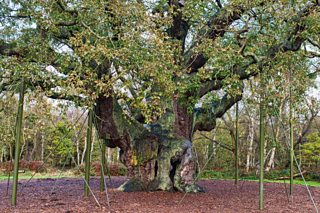
The Major Oak, Sherwood Forest
We want to champion our special trees, they don’t always have to be old and gnarly but they do need to have an interesting story. Take the three previous winners in England; The Major Oak in Sherwood Forest (needs no explanation, right?), the Cubbington Pear Tree, one of the oldest pear trees in the country but sadly right in the path of the HS2 rail line and last year’s winner; the Sycamore Gap Tree, sat on Hadrian’s Wall and visited by Kevin Costner no less, if you believe Robin Hood: Prince of Thieves.
The great thing is we have no shortage of special trees in the UK, as we have one of the largest concentrations of ancient or veteran trees in the whole of Western Europe. We’re not entirely sure why we should have so many more but a vast number will be found on our historic estates like Sherborne, Springwatch’s new home in Gloucestershire. Landowners over the centuries clearly appreciated these magnificent specimens, which is great for you and I.
The oldest is commonly accepted to be the Fortingall Yew in Perthshire, with estimates suggesting it to be at least 3,000 years old and anything up to 5,000 (yes that’s a rather large window!). Other famous old trees include the Ankerwycke Yew in Berkshire, where the Magna Carta was signed, the Boscobel House Royal Oak (the ancestor of the current tree) in which Charles II hid from the armies of Oliver Cromwell in and the Tolpuddle Martyrs Tree in Dorset.
As a rule of thumb the bigger the girth of a tree the older it is, so if you see a really fat tree it’s likely to be hundreds of years old. But this isn’t always the case. As you’ll know if you’ve seen a tree stump you can tell its age by the number of rings. Each ring is one year’s growth and some will be wider than others. This is because conditions impact the rate of growth, so in a perfect year with the best amount of sunshine and rainfall the tree will grow more than a really cold, dull year.
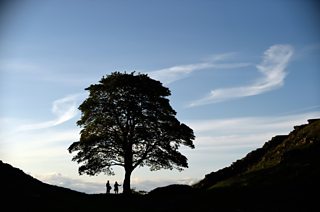
Image from National Trust
Likewise if a tree is growing on an exposed rock face on the west coast of Scotland it will face far tougher conditions than a tree growing on a country estate in the South East of England. Take a tree of the same age and same species from both places and one will be far larger than the other.
We’ve been recording trees like these on our Ancient Tree Inventory since 2006, with over 160,000 trees added and it’s still growing. Ultimately we want to see them receive better legal protection and care, they are as important as our historic buildings but receive far less protection. We’re hoping this will change following recent recognition of their value in March’s housing white paper. If you know of an ancient or veteran tree do add it to the database.
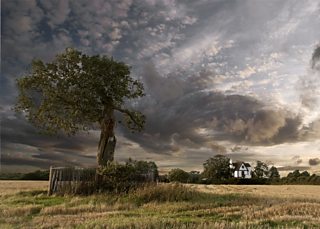
Image from English Heritage
In the meantime you can nominate your favourite special tree in Tree of the Year until 30 July; all we need is a photo, location, an idea of who owns the tree and most importantly its story! Thanks to support from players of People’s Postcode Lottery we are also offering a tree care award to the trees which are ultimately successful in the competition. This funding could be used to help the owner better care for the tree or provide interpretation materials for others to learn about its value.
We’ll reveal our shortlists in the autumn and then the public will be able to vote for their favourites in each of the four UK regions. We will then choose an overall winner to represent the UK in European Tree of the Year in the spring. Submit your nominations here.
The BBC is not responsible for the content of external websites.