Greylags: The fall and rise of Britain’s only native breeding goose

WWT
Partner organisation of the Watches
The British greylag goose is Britain’s only native breeding goose, but fascinatingly, not all greylag are alike.
To explain this, we must first dig into their turbulent history, which much like their population numbers, is very up and down.
There are two populations of greylag goose. The Iceland greylag, which breeds in Iceland and winters mainly in Britain and the British goose, which both winters and breeds both on the mainland and the northern islands of the UK.
At the end of the 18th century, the British greylag goose bred much more widely, breeding across Scotland, locally in England and most likely parts of Wales.
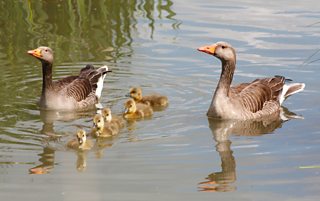
However by the late 19th century, persecution of the species had triggered a dramatic drop in numbers of the British greylag. A combination of issues such as the drainage and cultivation of fenland, overhunting, heather management and egg collection meant that by the 1930s, just 500 birds were still breeding and they could only be found in northwest Scotland. As such, they became referred to as the northwest Scotland population.
Concerned that numbers would tumble even further, wildfowl shooters stepped in and in the 1930s and 1960s, birds were released into southwest Scotland, Wales and parts of England from the eggs of the northwest Scotland population.
But this new ‘re-established’ population weren’t taken seriously by some of the birding community who regarded them, incorrectly, as a non-native population.
In recent decades, however, both populations increased so much in numbers and in range that they gradually overlapped and became impossible to treat separately.
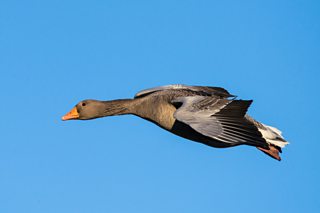
In 2008, the so-called ‘re-established’ greylag geese population was measured at around 51,000 birds and the two populations combined were estimated at around 86,000.
With so many areas where the birds were of mixed and uncertain heritage and with a further increase in abundance expected over the decades ahead, the scientific community decided to merge populations for conservation purposes so they could monitor and manage them on a biologically meaningful scale.
Since 2010, all greylag geese breeding in Britain are now regarded as a single British greylag goose population.
With population numbers sitting at around 140,000 in 2011, and these wonderful birds now dispersed around the UK, we can all appreciate this wonderful bird, no matter what heritage they share.