Swansong or staying strong: the uncertain future of the Bewick’s swan

WWT
Partner organisation of the Watches
Migration is one of the most hazardous tasks a bird can undertake. Yet they have no choice; they need to migrate in order to survive. The UK’s migratory swan population is no different, with Bewick’s and whooper swans whiffling in on their snowy wings to escape the northerly winter. Like ghostly spirits, they appear at dawn to give us heart as the winter freeze takes hold. These beautiful birds are hugely in tune with the rhythms of our Northern climate, so how is increased warmth and weather unpredictability affecting them?
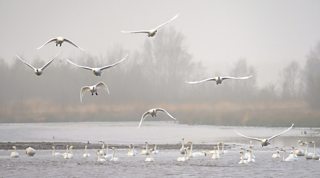
Flock of Bewick swans by Ben Cherry
The Bewick’s fortunes
WWT Slimbridge had 106 Bewick swans at the last count this year, and we are delighted that we can still provide a winter home for these special visitors there and at WWT Welney. Early indications show that around 26% youngsters are present, already a sign of a good breeding season. Clearly, they’ve made the situation work for them in the short term. But these numbers are sorely needed: Bewick’s swans have declined in Europe by almost a third since the mid-1990s.
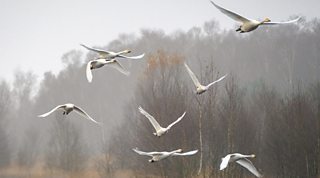
Bewick flock by Ben Cherry
A flying visit
Historically, the birds migrate west from breeding grounds in the Russian Arctic, often flying to the UK from mid-way refuelling sites in the Baltics, Germany and The Netherlands. In 2020 it was reported in the journal Global Change Biology that some have shortened their migration journeys, falling short of the UK. They are also ‘short-staying’ – cutting short their winter stopovers by an average of 38 days.
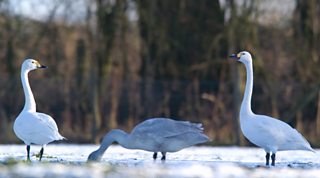
Bewicks and cygnet feeding by Richard Taylor Jones
Why are they doing this?
It’s likely they are driven by the warming weather to return. Dr Kevin Wood, who co-authored the paper, explains. ‘The birds are against the clock and want to get back to their breeding grounds as quickly as possible. If they overwinter in the Baltics or Germany they’re better able to gauge when they need to leave, as winter conditions will be less different to those at their breeding grounds.’
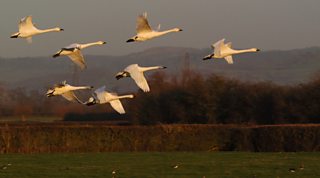
The strange case of reverse migration
This strategy isn’t without risk. Shorter migration might benefit the adaptable swans but unstable weather, competition and predation in the warming Arctic – where temperatures are rising twice as fast as elsewhere – could jeopardise the Bewick’s survival. ‘The climate is warming and becoming less predictable, and if the birds arrive back earlier they risk a cold snap which would freeze their eggs and mean low breeding success,’ Dr Wood says.
Although unpredictable weather is a very real threat, one story from 2021 shows just how adaptable these birds can be. As storm Darcy caused havoc across the UK, 11 Bewick’s swans that had set off on migration decided to turn around and come back to the safety of Slimbridge. They brought with them a 12th sensible swan we named Darcy. Yet if these wetlands didn’t exist, the Bewick’s would have nowhere to run.
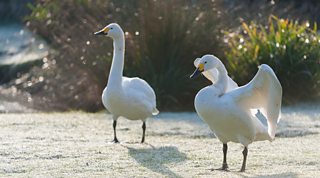
Bewicks on snow
It’s not just the weather
Flooding from rising sea levels, predation by the red fox and competition from whooper and mute swans could all potentially put pressure upon the Bewick’s as they encroach further into the tundra zone where they breed. These species are larger and more dominant than the Bewick’s usual companions such as the Arctic fox.
Additional hazards are lead poisoning across their migratory route and illegal shooting in Russia. Bewick’s swans are endangered in Europe and protected from hunting by law along the flyway. Despite this, a third of birds caught and x-rayed are found to be carrying shotgun pellets.
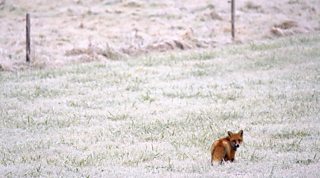
Red fox by Ben Cherry
The swans are deeply respected in the Arctic region and many hunters don’t realise they are declining or protected. There have been several projects to raise awareness, including the ongoing WWT-supported Swan Champions project.
Although the future is becoming ever more uncertain for our migratory birds, there’s a lot of support for them in each country they fly through and Dr Julia Newth, co-founder of Swan Champions, feels like they’ve never had so many advocates. ‘That gives us confidence that efforts will continue across their flyway. Bewick’s swan families have been visiting Slimbridge and Welney for decades and the fens, and although many are not flying as far, these sites remain an important winter home for these swans.’ As long as the Bewick’s continue to come, they will find shelter and safety in WWT’s wetlands.
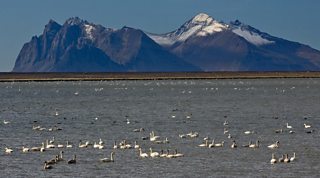
Whoopers in Iceland