
Can you tell us a bit about what you are doing?
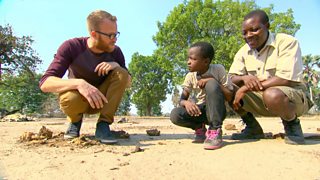
Having just finished filming our second series, we headed to Malawi to film two My Pet and Me African specials. The animals we focus on are wild, living in the utterly beautiful Liwonde National Park. I had the massive privilege of going elephant tracking with a safari guide called ‘Danger’ (what a brilliant name!) and Glory, his daughter. Don't spoil the surprise for your kids, but we did find elephants (and lots of them!!), the first time I've ever seen them truly in the wild, rather than on a game reserve.
Why did you pick Malawi and what is it like?
Last year our Animal Consultant on the show, Adam Tjolle, did a vet exchange in Malawi which got our Producer Rachel thinking....and the rest, as they say, is history. Arriving there made me realise it was the ideal place to make a My Pet and Me special. It's called 'The Warm Heart of Africa' because of the kindness of the people and the wildlife of Liwonde National Park, which is in the south of the country. It was like a drawing from a children's book of African animals and landscapes...hot red sunsets, baobab trees and termite mounds punctuating the horizon, huge lines of marching elephants of all sizes, hippos popping their heads out of the water and wiggling their ears, warthogs snuffling around on the ground, crocs basking on the riverbanks and African fish eagles smashing into the water to catch fish. With nature putting on a show like that every day, I think the choice of Malawi was perfect!
What's involved in the "caring" for wild animals?
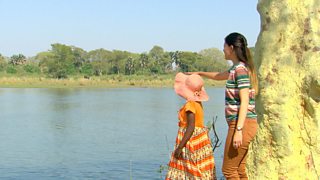
Clearly, caring for a wild animal is different from caring for a pet. Wild animals aren't owned by anyone, but the responsibility to protect them lies with everyone, so the 'care' is essentially about conservation - protecting the habitats of these animals to make sure they can continue to live. This means not just looking at an individual species in isolation, but ensuring that the whole system is properly looked after, so that everything from plants to prey to top predators can thrive.
I hope in a small way this show might encourage children to explore and protect the natural world around them. We're more in need than ever for children who want to defend wildlife.
Why is poaching such a big problem?
Poaching is thought to kill around 40,000 elephants every year and over the past decade the African elephant population has seen an estimated decline of 60% - and poaching has surely played a role in this.
In Africa, the biggest issues seem to be in the central region, with armed groups using the illegal ivory trade to finance their operations. Rangers and guides on the front lines in national parks have been killed trying to protect elephants. It's heartbreaking.
Educating children about the issues will hopefully help to eliminate the ivory trade sooner rather than later.
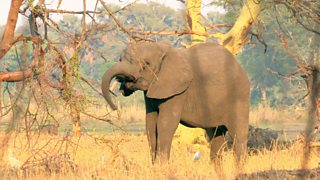
Poaching is a continuing problem in Malawi
Can you tell us about the conservationist dad and his child?
Danger has worked in the National Park for over 10 years, his passion for and knowledge of the Malawian bush is incredible, such an uplifting thing to see in action. Elephants are his favourite animal because he likes that you can understand what they're feeling by observing their behaviour. His passion and knowledge clearly rubs off on Glory, who at 8 years old already knows how to track elephants and she kept me right!
They live within the National Park, so they are living in amongst a wildlife spectacle every day. In spite of that, they are never blasé about it. Their enthusiasm and connection with nature is totally inspiring.
Can you describe the feeling you had when you spotted elephants on the wild?
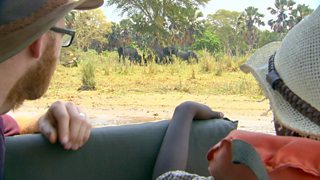
Total elation! There's the initial excitement and wonder of seeing such a large, majestic animal out there doing its thing - all flapping ears, trumpeting and surprisingly gentle footsteps - but I think the knowledge that these animals were wild and free made it particularly special. From a young age we become familiar with what an elephant looks like from books, TV and maybe zoos as well...but I don't think anything can beat seeing a herd out grazing, babies still feeding from their mothers with a stunning landscape as a backdrop. Utter magic!
How should parents in the UK explain to their children why conservation is important?
I think every parent can find their own way - but really, in many ways it is less about lengthy explanations and more about experiences. That doesn't mean you shouldn't talk about it - clearly you should - but I'm a big advocate of letting kids explore whatever nature they have access to, whether it's a bird feeder on the window or balcony of a flat, a local park or a national nature reserve. Kids will naturally forge their own connections given half a chance: by playing and exploring among the grass and trees, along the seashore, wherever it may be. The tiniest bug, which might seem gross or insignificant to an adult, can be a source of great intrigue and joy to a child. The best you can do is hide your distaste at a slug being brought home and give them (and yourself) the opportunity to learn about nature using free resources online or at the local library.
The transition from talking about protecting a blackbird in the UK to an elephant in Malawi isn't such a leap.
What could parents and children here do to help?
There are lots of great charities that support conservation work in Africa (and beyond), and some even have children's memberships that allow you to support conservation while fostering your child's interest in nature.
If you're lucky enough to be able to travel to a country with elephants or other threatened animals, choose your provider carefully to ensure that they're scrupulous, with solid conservation principles at their core.