
Head of BBC Outreach, Diane Reid, gives an insight into the department’s recent projects including a poignant film made in partnership with White City Estate residents.
Earlier this week I attended a screening of Tales of the White City – an extraordinary musical from the composer Benjamin Till, created with over 400 residents of the White City Estate in west London. This is an area which has been home to the BBC for over 50 years.
The film is made up of stories about individual people living and working on the estate, generally using their own words which have been set to music. These are intimate portraits revealing deep feelings about life, past and present, on the estate.
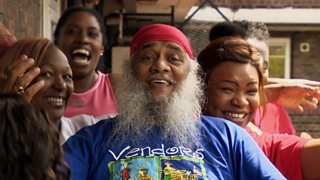
A still from the musical Tales of White City
What was striking at the screening was the reaction of the audience.
At the end of each story, the audience applauded and whooped – affirming and celebrating the individuals – each of whom had been brave enough to reveal something very personal and important about their lives.
The reason the film works so well is that it was made as a true partnership between the individuals and the film makers. Those being filmed trusted the film makers enough to let them into their lives and to get to know them, and this is reflected in the film. There are no trite sound bites here, but real stories, told by individuals in their own voices. And that is what comes across on the screen.
As a former film maker, I know that the moment when someone reveals a little bit of themselves on camera is the moment when the film comes alive, when the research and patience and re-takes and frustrations of filming suddenly come good. Because at that moment you know that you have made an honest film, which truly represents that person and their views.
It is this honest relationship which is at the heart of the BBC's outreach work. Across the UK, the BBC connects to individuals and communities on a wide range of activities, ranging from work experience with Radio 1, to BBC Children in Need’s Radio 2 CarFest, to Stargazing LIVE.
The breadth and reach of this work is reflected in the BBC Corporate Responsibility Performance Review 2013, published today. It complements the BBC Annual Report and is a summary of the BBC's corporate responsibility work from April 2012 to March 2013. It's produced for licence fee payers as part of the BBC's accountability process.
In the report you'll find information about the BBC's commitment to developing STEM (Science, Technology Engineering & Mathematics) skills in young people and its Women in Engineering Group. There's an account of the BBC National Orchestra of Wales' accessible concerts for more than 3000 schoolchildren, including a special concert for deaf and hard of hearing children, where members of the young audience were able to touch the musical instruments as they were played.
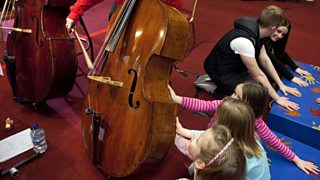
Children participating in a BBC National Orchestra of Wales accessible concert
There's also information about the BBC's environmental work. We raise public awareness of the issues through our broadcasts. We also set ourselves targets to address our own environmental impact. This year we exceeded our recycling target by 14%.
We've been working hard to achieve other environmental targets. For example, those connected to our properties. We are moving out of older buildings (such as Television Centre which accounts for nearly a quarter of our energy usage) to newer ones such as Salford and New Broadcasting House in London, which were designed with green credentials in mind. But this takes time, and we've had to restate some targets for 2016.
The BBC has established 'albert' - a system of measuring the carbon footprint of programme making which has been adopted by organisations across the broadcast sector. CBBC's 'Wizards vs Aliens' - a science fantasy television series - is just one of the programme which has been piloting the next generation of albert, using hybrid generators on location to reduce CO2 emissions.
We're committed to working with local communities in skills development as well.
Across the UK, we run work experience programmes for young people from all backgrounds. In London, Radio 1Xtra DJ Charlie Sloth welcomed sixth form students from Hammersmith and Fulham and Westminster boroughs on a BBC Outreach work experience scheme to give them hands-on production experience, opening doors to a career in the industry.
In Bristol, the BBC has a partnership with the Domino Effect project, which works with people with a history of drug and alcohol abuse. The BBC is one of a number of organisations that have provided two week placements which are the first step back into full time work.
In MediaCityUK in Salford, where I work, we are in the second year of our Young Ambassador scheme. These are salaried six month entry-level work placements for 16-19 years olds from the boroughs of Salford and Trafford which enable them to gain core work skills and an NVQ qualification. The scheme is part of BBC North's commitment to the local economy and previous Young Ambassadors have already gone on to apprenticeships, jobs with the BBC, other paid work and college.
The BBC also runs schemes such as Extend for people with disabilities, and our new technology apprenticeships.
All of these are examples of the ways in which the BBC links with its audiences, informing and enriching the content we make. Outreach for sure, but ‘in-reach’ as well.
And on a wet Friday evening, at a screening in a school hall in Shepherd’s Bush, with a red carpet and a real première atmosphere, it was a privilege to be part of what can be achieved when the BBC and its audiences work together.
Diane Reid is Head of BBC Outreach.
- Read The BBC Corporate Responsibility Performance Review 2013.
- Previous year's reports are available to download on the BBC Outreach website.