
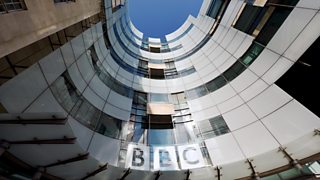
Britain has a priceless asset. It is a brand recognised and respected all over the world; a leading competitor in a global media market; one of the most trusted news providers; and a coveted tool of global influence. All this in one institution that projects the UK’s voice worldwide - reaching 430m people each week.
At home, the role of the BBC is hotly debated. Yet we are the envy of the world. Yes, we face challenges. Audience expectations have shifted dramatically. Disinformation and social media filter bubbles have transformed the news environment. As global streaming companies pour billions into content, we face funding pressures - and questions about our funding model.
Today, the BBC can do more for Britain than ever. Over the course of this decade, global success will be defined by ideas. Creativity is the new source of value for companies and countries alike and the UK has a huge advantage. Our creative industries are worth more than £100bn per year and grow at twice the rate of the wider economy. Film and television are the jewels in our crown. We punch way above our weight.
The BBC is the single biggest investor in original British content. Every £1 we spend generates £2 for the UK economy. We operate as an engine powering the whole creative sector.
And one thing sets us apart. Streaming companies produce some outstanding programmes, but they commission for global subscriptions. Rooted in the UK, the BBC exists to serve audiences - not shareholders. The BBC will never be driven purely by algorithm. Of course, data is helping us transform iPlayer, BBC Sounds and BBC News Online. But we can never lead the creative field by relying on what has worked before.
The BBC’s formula for the UK’s creative success lies in being paid for and owned by the British public. The universality of the licence fee guarantees our commitment to creativity and risk-taking. Because we are funded by everyone, we must offer something outstanding for everyone.
Far from growing less relevant in a digital age, this unique relationship with audiences has never been more necessary. How better to hardwire creative ambition into what we do in today’s media landscape? It ensures independence for the national broadcaster; it obliges us to serve everyone; it secures our responsibility to reflect every part of the UK.
This could hardly be more important. As the commercial sector pulls out of local radio, our stations are doing even more for communities. As local newspapers decline, we’re funding a new network of local democracy reporters. A decade ago, a third of the BBC was based outside London. Today it is half. By 2027, I hope at least two-thirds of the BBC will be outside the capital.
We must continue to adapt. BBC iPlayer smashed all records last year and BBC Sounds is growing strongly but we need to go further. We need to do more for young people.
Our commitment to impartiality remains absolute, but we must work harder than ever to ensure our coverage reflects all voices across the UK. We must work with our staff to resolve outstanding pay issues and make the BBC the best place to work.
The BBC must hold its nerve. If Britain did not already have a media brand capable of exporting our creative strength to the world, we would be desperate to build one. If we didn’t have a trusted global news service, we would need to create one to counter the state-backed actors of Russia and China.
There is an exceptionally high correlation between places where people are aware of the BBC and think positively about the UK. More than that, the BBC helps UK trade. Any vision of Global Britain should include the BBC. When the UK is seeking to forge new international partnerships, my message is simple. The BBC is a truly powerful global brand for Britain. Let’s build on it.
This article originally appeared in the Financial Times.