A summer with the World War One at Home tour

Moray London
Executive Producer, BBC London
Tagged with:
For everybody involved in the World War One at Home production, the final weekend was somewhat of a bittersweet moment.
Sweet in that it marked the conclusion of an incredibly intense four months that kicked off in Ipswich at the end of May, and many months of planning planning and preparation before that. Producing face-to-face events involves a lot of early rises and long days, regardless of what the unpredictable British weather decides do.
And bitter in that the Derby event brought to an end what has been a really rewarding experience - for me and the teams that have worked on it, as well as the nearly 230,000 visitors we’ve welcomed since the tour started.
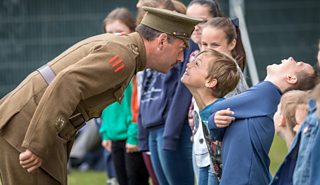
There have been countless stories of people who have been moved by things that they have learned or experienced at our events. People who have found out more about the impact of the war on their family history with the Imperial War Museum’s Lives of the First World War project, or children who have had taste of what life was like as a brand new recruit on the Army parade ground.
Creating opportunities for our audience to have these individual and tangible experiences relating to World War One was something we really wanted to achieve as part of this tour.
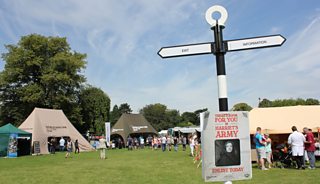
BBC Learning provides a range of fantastic online content about World War One through Bitesize to support children who are studying this topic, and their teachers and parents. But, for some, school education may not always lead to the interest and desire to find out more. That’s why we believe immersive experiences with education at the heart of them, like the World War One at Home tour, can be incredibly valuable. These events can bring life to a topic, providing hands-on and interactive experiences.
School-children have really enjoyed our activities. Teachers who’ve visited the site have requested some of the materials so they can be re-used in the classroom. Some families came back for a second day, even though they’d completed all the activities. Such was their children’s keenness to demonstrate a newfound knowledge of World War One.
For those who knew about World War One, there were often new perspectives to be discovered too, like learning that more soldiers died of infection than the being shot. Some young girls who attended our events were astonished by Katie Adie’s account of life as a woman before the outbreak of war.
In BBC Learning, we have a huge amount of experience at working with external partners, particularly around live events. We also knew that where the scale and ambition of the World War One at Home tour was concerned, partners would play a hugely significant part. We weren’t disappointed.
Over the course of the last four months, we’ve worked with dozens of partner organisations and hundreds of individual volunteers, all of whom have been willing to dedicate their time, effort and expertise for the benefit of our audience.
They’ve included:
- The Royal College of Pathologists who ran the ‘blood and bugs’ hands on exhibit in a 20 metre purpose built Nissen hut looking at disease control and medical advances from 1914;
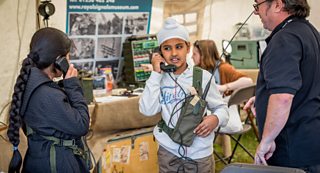
- The Royal Signal Museum who provided working examples of early communications methods from radio telephones to Morse code activities - a big hit with children, and
- The Royal Pigeon racing association who worked with their members all over the UK. Visitors wrote a message which the pigeon would carry back to its home loft a few miles away, while we showed live pictures of the pigeon arriving home and the message being read out. To tell children, who often take instant communication for granted, that this was the most reliable form of communication a 100 years ago really blew their minds.
Our tour is part of a much bigger World War One season to mark the centenary of the Great War, which is incredibly important for the BBC. It’s scale is unlike any other previous BBC season, with over 2500 hours of programming across television, radio and online, touching all of the BBC’s services.
In the context of this ambitious BBC season, our World One War tour was the most editorially ambitious series of events that BBC Learning has produced. Its scale has been significant, with 8 flagship events covering the length and breadth of the UK, led by BBC Learning, and 18 smaller scale events led by the BBC’s English Regions teams.
This ambition has only been realized by a genuine collaboration between BBC Learning and the BBC English Regions teams, working together and sharing assets. From a BBC Learning perspective, we’ve brought our expertise and resources for putting on large educational events. This has complemented the English Regions teams’ knowledge of their audience, and experience of engaging them.
In this way, I believe we have made a big contribution to the BBC’s centenary season, complementing the fantastic broadcast content and online resources, and providing individual and real learning experiences about World War One.
If you were one of people who attended our events, or if you have any thoughts at all on what the World War One at Home tour, I’d love to hear your comments below.
Moray London is Executive Producer, BBC Learning