Back In Time For School: learning the importance of education
Polly Russell
Co-presenter, Back In Time For School
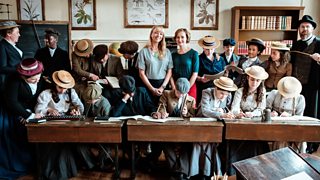
I’ve worked on Back In Time For… since 2015, but this series has been my favourite yet.
Back In Time For School takes students and teachers all the way back to 1895 to find out what life was like when just 4% of children went to school. We then follow them through the decades, all the way to cool Britannia and 1990s education.
How times have changed
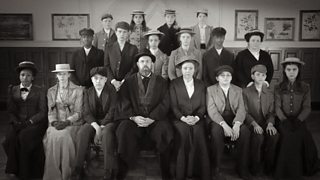
We chucked them in at the deep end. It’s easy to forget how different schools were in 1895. Most children just didn’t go to school, and when they did it was a world away from what our children – (and teachers) know. Schools were much stricter and more regimented than anything today.
One thing did surprise the children. They were happy to be taught in a mixed classroom, rather than being split into girls and boys classes. They would later experience this, but it wouldn’t be for another five-to-ten years.
The other side of the coin was the 1970s, the beginning of progressive education. Coming out of 1950s grammar schools and the 60s secondary modern, this maybe went too far. Child-centred learning and the end of ‘talk-and-chalk’ lessons was a challenge for teachers and students. Although, when you look at what has become a mainstay in our education system, a lot of these ideas have stood the test of time.
A snapshot of a point in time
Education is a brilliant way to find out what a place was like at certain points in history. The way education is run is subject to the pre-conceptions of that time. It’s really amazing to see. The regimented classrooms of the late 19th Century, when children should be seen and not heard, compared to the progressive education of the 1970s during the free-thinking movement, they’re all affected by the ideas at the time.
It wasn’t just difficult for the students, teachers also struggled. They had to put their own teaching styles to one side and think about what it would be like at that time. Some of it was extremely uncomfortable. From being forced to tie a left-handed child’s arm behind his back to having an almost entirely loose classroom setup, there were a lot of things the teachers would never have done today.
One thing that struck the children was when they moved from the 1950s to the 1960s. In the 50s they were in grammar schools. It was rigid and old fashioned but academically ambitious. The students were expected to aim to go to university and become leaders, but that changed when they went to the secondary modern in the 60s.
In this scenario they’d failed the 11+ so couldn’t go to the grammar school. The most telling difference was at a careers evening where the students were told they could either be a typist or primary school teacher - if they were a girl - or go down the pit or be a mechanic - for the boys. They were disappointed that their lives had been dictated to them by an exam they took at 11 years old.
Education is a privilege
It’s important for everyone to remember what a privilege education is. 100 years is not a long time in the grand scheme of things and we’ve come so far. The students understood this was a privilege and were very grateful for the education they have by the end of the series.
Life through a lens
As a social historian, educations is a brilliant litmus test for the attitudes of a time period. It shows us how people lived, what society’s aspirations were and much more. Food, and particularly for this series, school dinners are also interesting. In the early years, the food was very beige but nutritious, for example, fish pie. A lot of the students had never eaten anything like it before and weren’t taken by it. The lack of choice back then was a struggle - if you didn’t eat what you were given you would go hungry, although we obviously didn’t go that far.
Social history is interesting to me because it’s entirely democratic, you don’t have to have gone to university to have an opinion. Everyone has been to school and everybody eats. These are all things that we experience and can have our own ideas about how we improve them or what it means.
Watch Back In Time For School on 3 January 2019 at 8pm on BBC Two.