
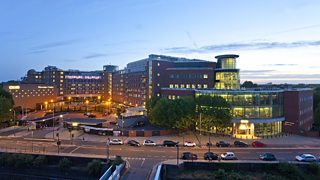
Television Centre
BBC Alumni member and former BBC Children's Researcher Emma Cashmore remembers the joy (and sometimes embarassment) of live TV and explains why the skills she acquired are still useful.
While in my first job as a children’s book editor, a recruitment consultant told me that publishing people lacked the “requisite extrovert personality to be suited to a career in TV”. I was therefore delighted to be accepted onto the BBC Production Assistant Traineeship before becoming a Children’s TV Researcher three years later.
When I joined BBC Children’s in 2001, I not only stepped into my dream job but embarked on an exciting career that spanned six years. I accrued memories that would last a lifetime and skills that proved invaluable and transferable throughout reinventions as a video producer and marketer.
BBC Children’s was based in the East Tower at Television Centre and this was where I worked for most of my TV career. Inside that austere building was a creative hub of energetic and enthusiastic individuals whose mission was to make fun and entertaining content for children. Being part of the hive that carried out that mission was an unforgettable experience.
Ideas were our currency and we were always on the lookout for inspiration for new items. CBBC and CBeebies Researchers could be required to become an ‘expert’ on almost any topic, from the ratio of chocolate to packaging in an Easter egg to the intricacies of giant origami (exactly how long does it take to craft a giant origami dog, and can we shoot it live?). We used a myriad of skills from script writing to talent wrangling, to art and craft making, to shooting and editing. The word ‘can’t’ was not in our vocabularies. Because we believed that ‘we could’, we pushed boundaries and produced ever more innovative television.
There are many highlights that I remember from my time at BBC Children’s including writing and producing an insert film about snail racing with Basil Brush, discussing fossils with Sir David Attenborough and getting up close and personal with the monsters from Doctor Who. Those who have had the pleasure of pre-recording Christmas shows will also identify with my experience of dressing up as a snowman in the height of summer. Even training to be a Production Assistant was exciting and I will forever associate Sophie Ellis Bextor’s "Get Over You" with learning to count bars of music for our mock Top of the Pops programme ‘filmed’ at Marylebone High Street.
Of course, as anyone who has worked on live TV will know, it didn’t always run smoothly. There was the time that, when being shadowed by a new trainee Production Assistant whilst working on the CBBC links, I tipped coffee over the vision mixer’s desk before having to count to an OB over the phone because comms had gone down (not because of the coffee I might add). I was worried that I’d put her off, but apparently not, as she was excited about the extra ‘jeopardy’ I’d shown her. And I was mortified when I was once caught in shot, live to the nation on Blue Peter with my bum in the air, whilst I was supposedly hidden behind the make desk. No one had thought about the top shot in which I was clearly visible. Of course, the joy of live television is that the next day we put it all behind us and concentrated on the next programme, with no need to worry about having to sort it all out in the edit.
Shortly before BBC Television Centre closed its doors, I returned for one last look around, taking my partner with me to show him where I used to work. Witnessing his awe as we walked into Studio 1, I realised that television still has a unique magic that I was privileged to experience on a daily basis. Television studios are quite possibly one of the most exciting working environments that exist, even if the glamour that surrounds them belies the sheer hard work that goes into producing a studio show. I am very proud to have been part of the organisation that produced (and continues to produce) many of the shows that have shaped our cultural identity and to have had the opportunity to work in that same iconic studio.
I no longer work in television but the skills and values that I developed at the BBC have stood me in very good stead: diplomacy; valuing creativity and innovation above all; problem solving; to name a few. These things I have taken into my marketing career but one thing that I have never quite found outside the BBC is that safe, collaborative environment where people are not afraid to try at the risk of failure. We knew that innovation and originality sometimes meant things going wrong, but we supported each other. And when things went right? Well, that was when the magic really happened.
Emma Cashmore is a Marketing professional and content producer, and a former BBC Children's Researcher