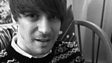
One of the wonderful things about the Glastonbury Festival is that it means many different things to many different people. So diverse is its creative ethos, so rich its history, so deep its impact on the UK’s cultural landscape over the last (almost) half century, that it has grown from being a somewhat quirky fringe event to become a key pillar of the national calendar.
Just what it means to its legions of devotees is up for debate: where some may recall the radicalism of its early years, others will focus on the cavalcade of acclaimed artists who have graced the Pyramid Stage. Where some might cite a change of ethos, others will point to innovation and evolution. I think its development over the years more fully reflects wider changes in society. But whether it marks a significant rite of passage, a spiritual quest, or just a chance to have a good time, what is certain is that Glastonbury remains a unique and very special event, with a beauty and flavour all of its own.
To me, it will always be associated with the magical times I spent there during my childhood. And this year’s festival has a particular resonance because it marks the 30th anniversary since I first set foot on that hallowed ground.
Yes, it was in 1984, as an eager and excited nine-year-old boy, that I had my first taste of Glastonbury, which I remember, felt like stepping into another world - a kind of pastoral Utopia in which the rules of the classroom no longer applied and the restriction of bedtime no longer held dominion. It was this palpable sense of freedom that I recall most vividly; a feeling that became bound up with the festival, which gave me a chance to participate in a version of life that seemed anything but ordinary.
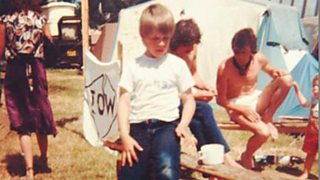
Portrait of the author as a young boy (Glastonbury Festival, 1984)
After this first initiation, we went pretty much every year after that, and each occasion is redolent with many fond, and the odd not-so-fond, memories. There was the time we travelled in a converted bus as a kind of spurious homage to the original Merry Pranksters (fond); the night we spent sat round the campfire chatting to the Hothouse Flowers (fond); the hours spent in the children’s field learning to juggle and stilt-walk (fond); and then there was the job of emptying our camp’s chemical toilet, a task always given to us kids as a lesson that not everything in life is easy, which became a yearly ritual (not-so-fond).
Many of my best memories are associated, not with seeing the famous headline acts, but with the random and incredible things you see when wandering about the site: surreal theatre troupes, circus entertainers, impromptu dance parties, food from around the world (yes, it was here that I tasted my first ever doner kebab), and exciting music and performance around every corner.
In ‘84, I can vividly recall being astounded by a bespectacled man playing guitar, whose name struck my young mind as being very peculiar. He was called Elvis Costello. And since then there have been too many incredible musical memories to list, but watching Dave Grohl drum with QOTSA in 2002 was, as a devoted Nirvana fan, truly wonderful to behold. So often though, it’s the moments you don’t expect that turn out to be among the best (somewhat of a rule for Glastonbury), like the sunny Sunday afternoon Galliano played on the main stage in 1993 and inspired a decidedly indolent crowd into a frenzy of what might, for want of a better term, be described as Acid-Jazzercise.
In the years I couldn’t go, it was to the BBC that I turned to fill the void. I still can’t quite believe I missed Radiohead’s headline slot in 1997 but the atmospheric BBC coverage went a good way to make up for it. And the same goes for Blur’s set in 2009.
The BBC/Glastonbury connection goes back many years of course, but I was interested to find out a bit more, and so I did a little digging in the archive and at the British Library, and although my findings aren’t comprehensive, they do offer a sketch of this rich history.
The furthest back I uncovered was actually a television broadcast of Fela Kuti’s performance in 1984, which was shown four years later on BBC Two - and Radio 1 aired several live sets from the 85 festival including The Style Council, The Boomtown Rats and Hugh Masekela.
Of course, it was through Radio 1 that the BBC’s coverage of Glastonbury developed in the coming years with a variety of sets broadcast through the late Eighties and early Nineties, including single In Concert recordings of a wide range of artists such as Lloyd Cole & The Commotions, Suzanne Vega, World Party, Joan Armatrading and The Levellers. Many of these concerts were made available on vinyl via the BBC Transcription Service which was subscribed to by radio stations and broadcasters around the world, who could then feature the content on their own shows.
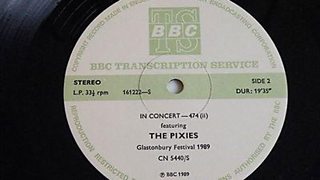
Glastonbury on vinyl featuring Pixies in 1989
In 1993 John Peel and Andy Kershaw broadcast live from the site for Radio 1 and Johnnie Walker hosted a highlights show on the station which featured many of the acts playing that year, including Robert Plant, The Black Crowes, Alison Moyet and Christy Moore. Peel returned the following year, which saw him present highlights and a live set from Orbital. Other live sets in 1994 came from Tom Robinson, Saint Etienne and Nick Cave & The Bad Seeds. Steve Lamacq and Jo Whiley joined the party with a Christmas show that year, ‘Evening Session Live Rewind’, which featured Ride’s set at the festival.
Mark Radcliffe, Johnnie Walker and John Peel all presented from Glastonbury in 1995, but it was 1997 that saw the first live BBC Television broadcast (following on from Channel 4’s coverage in ‘94 and ‘95) in a year which saw performances from The Prodigy, Smashing Pumpkins, Pavement, Van Morrison and a lot of mud!
Since then the BBC’s coverage has gone from strength to strength and now includes comprehensive TV programming across BBC One, BBC Two, BBC Three and BBC Four and radio programming on Radio 1, 1Xtra, Radio 2 and 6 Music. Last year saw digital coverage really take off and this year’s offering is just as ambitious, with live streams from six stages available on BBC Online and Red Button, while BBC iPlayer will feature highlights from across the weekend for 30 days after the festival finishes. In addition, BBC Introducing will again be at Worthy Farm giving the chance to new, up-and-coming artists to play at one of the world’s greatest festivals.
I’m afraid I’ll be spending my 30th anniversary watching from afar and so making a lot of use of everything the BBC has to offer, so I’ll finish with a few tips on what to keep an eye out for.
The evergreen Dexys (Acoustic Tent, Saturday) and their live shows are pitch-perfect, theatrical and irreverent; Kate Tempest is a young, passionate and forthright performance poet who plays the Left Field stage on Sunday night; Royal Blood are a fabulously raw rock duo and play the John Peel Stage on Saturday afternoon; they are followed by Wolf Alice, who are like a young mix of Ride, MBV and Sonic Youth and are just brilliant; Radiohead’s supremely talented Jonny Greenwood plays with the London Sinfonietta first thing on Friday on the West Holts Stage; and finally, the legend that is Dolly Parton will no doubt wow the festival on the Pyramid Stage on Sunday afternoon.
Ben Murray is Editor of the BBC Media Centre.
- Read Glastonbury 2014: The weird and wonderful worlds that lie beyond the big stages
- Also Bob Shennan's blog Preparing for Glastonbury 2014
- Follow the Glastonbury action on twitter @bbcglasto
- Watch live performances online and on redbutton from Friday 27 June