
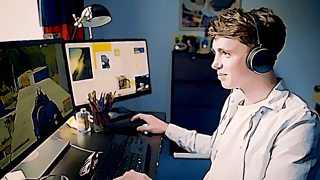
Murder Games tells the true story of Breck Bednar, a 14-year-old schoolboy who was lured to his death after being groomed online by Lewis Daynes.
It was a very different type of film première.
A small cinema in central London - a family, their friends, teachers, youth workers, the national press. And at the heart of it all, a powerful and disturbing film - about a talented and much loved 14-year-old boy Breck Bednar who had been lured to his death by an online predator.
I was at a screening of BBC Three’s 'The Life and Death of Breck Bednar', part of an event organised by the BBC’s Outreach team to raise awareness of the dangers of online grooming, with an expert panel and teaching resources from BBC Learning. It was one of a number of events organised by BBC Outreach to maximise the impact and reach of the programmes we make.
The film, a docu-drama which includes interviews with Breck’s family and friends, as well as reconstructions of the events leading up to his death, starts with the chilling phone call made by Breck's murderer Lewis Daynes to the police shortly after Breck died.
The film is difficult to watch at times - although there’s warmth and even humour - but it’s an important film and vital viewing for anyone who knows or cares about young people and the risks associated with the internet. It includes interviews with police investigating officers as they piece together how Lewis groomed Breck over a period of time, turning the social gaming he loved into a means to separate him from his family and friends.
The screening was followed by a stunned and respectful silence. There was a pause - and then Breck’s family and friends walked with quiet dignity out of the auditorium. The panel chair, Radio 1’s Tina Daheley explained that Breck’s family wanted a moment to gather their thoughts.
And then they returned - Breck’s mother Lorin LaFave taking the stage with two other speakers - Jonathan Baggaley from CEOP (Child Exploitation and Online Protection Centre) and Kat English, the film’s Director.
After Breck’s death, his family, including his mother, father and three younger siblings agreed that they wanted something positive to come out of their great loss - so they are committed to spreading the word about the dangers of online grooming. Participating in the film and attending the screening was part of that commitment.
During the panel session which followed the screening Lorin talked about the lengths she had gone to to protect her son - every parent listening could relate to what she had to say.
At one point during the discussion Breck’s mother was asked why she agreed to make the film with the BBC. Her response was that, although she had been asked many times if she would be involved with filming, she decided to go with the BBC because of the resources, like the learning materials and the Outreach event, that the BBC would bring.
BBC Outreach also organised a session after the screening where staff volunteers worked with teachers and youth workers on how the key messages from the film could be built into lesson plans. During this session they viewed three films commissioned by BBC Learning which covered issues such as stages of grooming, online safety and challenging perceptions of paedophiles, and used BBC Learning workbooks.
There’s a lot of information about online grooming available for parents and teachers, but the teachers involved in the workshops said what was different about these resources was that they were current and new and featured the voices and opinions of young people themselves. In this way, the film helps young people watch out for each other, something which has more credibility and resonance than being told what to do by parents or teachers.
This event brought together different parts of the BBC - BBC Three and its YouTube Channel, BBC Learning and BBC Outreach - all of us working in the spirit of true public service broadcasting. We felt a great sense of responsibility to Breck and his family to make the lessons they so painfully learnt available and accessible to all.
The main credit for the power of the film goes to Breck’s family and his friends for their bravery and determination to raise awareness. But I would hope that the work done by the production team and other parts of the BBC is a worthy support to their courage.
The film starts with Breck’s death, but goes on to talk about the life he lived, with a loving family and fantastic friends who shared his passion for gaming.
At the screening, Breck's friends wanted to make the point that although online gaming was the means used to groom their friend, it was also the way they supported each other after his death. It’s also the way teachers, parents, youth workers and children can download resources and learn more about keeping themselves and their friends safe.
This is very much in the spirit of the Breck Foundation which was set up by his family. The message is to enjoying playing games online but still keep it real with family and friends. In their words, to ‘Play Virtual, Live Real’.
- Murder Games will be broadcast on BBC One at 10.45pm on Wednesday 3 February. It is also available to watch via BBC iPlayer or via the BBC Three website.
- Read Siobhan Kilroy's post on how BBC Outreach helped make Murder Games.
- Other sources of help, information and advice as well as the BBC Learning materials can be found on the BBC website.
- Watch interviews with Breck’s mother Lorin and his friends Sully and Max.
- BBC Three goes online-only on Tuesday 16 February 2016; see the beta version of BBC Three's Daily Drop online now.