What do astronauts need to survive in space?
Astronauts survive in space thanks to special equipment and technology that helps them stay safe and healthy.
Space is a very dangerous place but here's how they stay safe.
Spacesuits
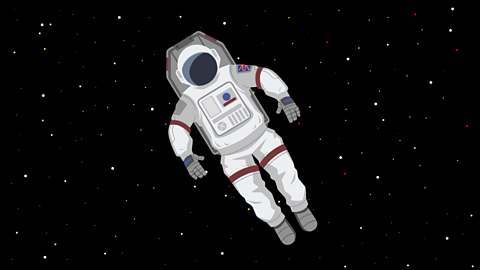
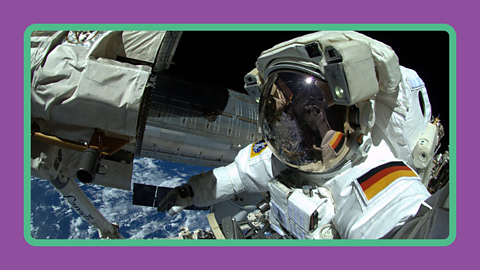
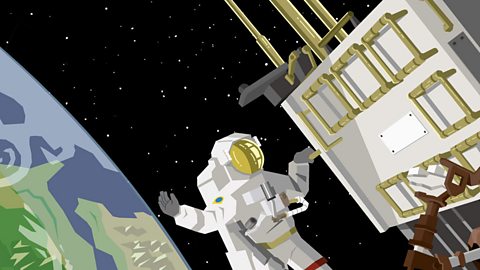
When astronauts go outside of their spaceship or space station, they wear spacesuits. These suits are like mini-spaceships that protect their bodies.
The temperatures outside in space are extreme. As the ISS travels from sunlight into darkness, the temperature drops from 120°C to -160°C.
The spacesuit gives them air to breathe, keeps them warm or cool, and protects them from space dust and the Sun's strong cosmic rays.
Air to breathe
In space, there is no air like on Earth, so astronauts bring their own oxygen. Their spaceship makes air for them to breathe, just like how plants help make air on Earth.
On the International Space Station (ISS), there is a continuous supply of oxygen. It is taken from water.
The spaceship also removes bad air (carbon dioxide) so astronauts don't become sick from breathing it.
Food and water

Fresh food doesn’t keep for long in space so all meals and snacks are packaged to stay fresh for up to nine months.
Astronauts add water to this freeze-dried food and heat it up. They can even eat their favourite foods like pizza and cookies.
However, no crumbly food is allowed on board the spacecraft as the bits would float around and block air vents and equipment.
The water on the ISS is recycled from the astronauts sweat and even their urine!
Don’t worry though, machines clean the water to make it safe to drink again.
Cosmic rays
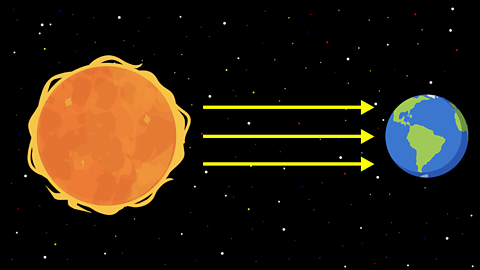
Space is filled with harmful radiation and cosmic rays from the Sun.
Spacecrafts and spacesuits provide some protection.
The walls of spaceships are like shields that help block dangerous radiation from space.
Gravity
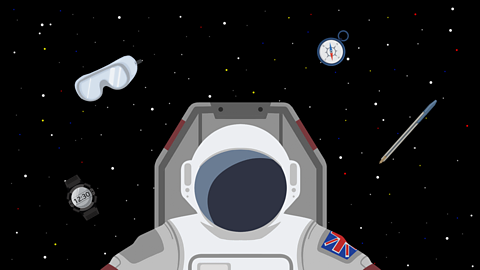
On Earth, the force that keeps us standing on the ground is gravity. However, at 400 km above the Earth, astronauts experience zero gravity or weightlessness.
This means that they float around, and many astronauts report that it makes them feel sick for the first couple of weeks.
When they arrive back down to Earth, many astronauts are a few centimetres taller. This is because the spine is not exposed to the pull of Earth's gravity. This means that the vertebra (the little disks that make up the spine) can expand and relax, allowing astronauts to actually grow taller.
Exercise
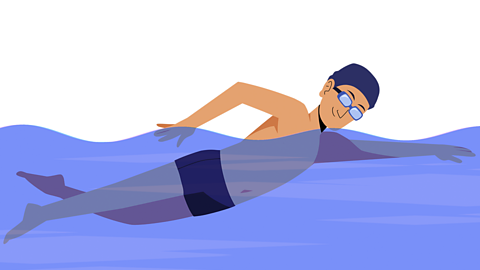
Without gravity in space, astronauts float around, which might seem fun but their muscles and bones become weak because they don't have to hold up the body or walk or run.
It is really important for astronauts to do exercise in space.
To stay strong, astronauts use special equipment to exercise for about two hours every day. This means that they do not lose too much bone or muscle mass, so that when they return to Earth they can still function normally.
Sleep
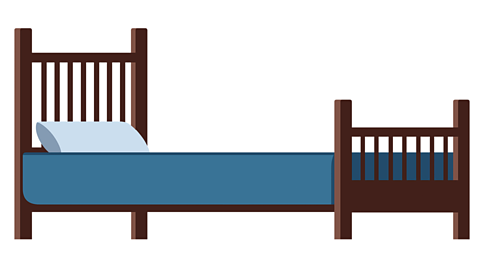
Living in space is very different from living on Earth.
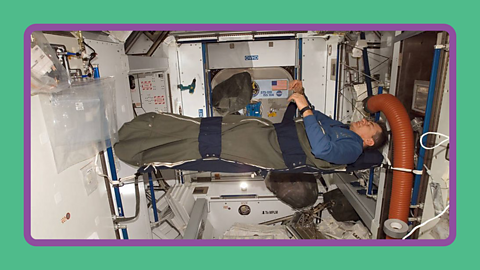
Astronauts sleep in sleeping bags that are attached to the walls so they don't float away while they sleep.
Astronauts also have to wear eye masks or cover the windows because the Sun sets and rises every 90 minutes as they orbit the Earth.
Communication
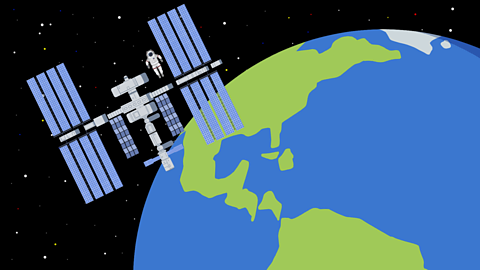
Astronauts from around the world spend up to a year in space at one time, living and working on the ISS. Even though there are up to six astronauts at any one time, it can still get lonely.
Astronauts have regular contact with their colleagues, friends and family through special radios and video calls so that they can maintain good mental health.
Returning home
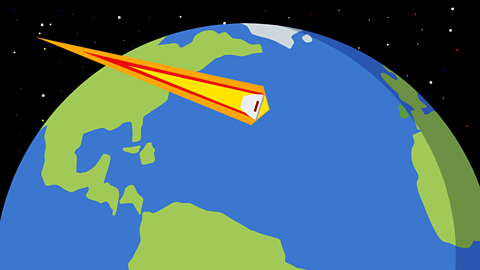
When astronauts finish their mission, they come back to Earth in their spaceship.
The spaceship uses parachutes and other systems to slow down so that they can land safely.
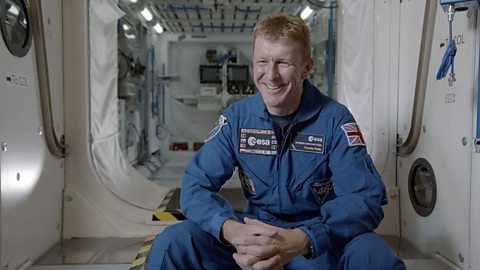
Watch: Tim Peake on the importance of spacesuits

You might have dreamed of floating in space: the International Space Station (ISS) glinting in the sunshine beside you and the Earth hanging below. It might sound like a beautiful and calm place, but space comes with a serious health warning.
If you stepped out into space without the proper equipment you’d only last a few seconds. The ISS needs to recreate the conditions of Earth in space. Astronauts need air to breathe, water to drink and a stable environment.
Yet, even within the safety of the ISS, there are invisible dangers that push the human body to its limits.
What’s it like for the men and women who have to live and work on the final frontier?
Tim Peake explains how spacesuits keep astronauts alive when they're outside the space station. Archive: NASA
From the window on the International Space Station, space looks like a beautiful and peaceful place.
And floating in space sounds like great fun. But you wouldn't want to step outside without a suit on – space is a dangerous place.
A spacesuit is like a mini spaceship. It's got everything an astronaut needs to survive.
It's made from a tough material to withstand impacts from tiny bits of dust and debris whizzing around the earth faster than a bullet.
The suit also shields the astronaut from the freezing and scolding temperatures in space.
These can be 120 degrees in the sun and minus 100 degrees in the shade.
And lastly, the spacesuit has an oxygen supply to breathe, which also inflates the suit and provides a pressurised environment which protects the astronauts, like me, from the vacuum of space.
Fascinating facts
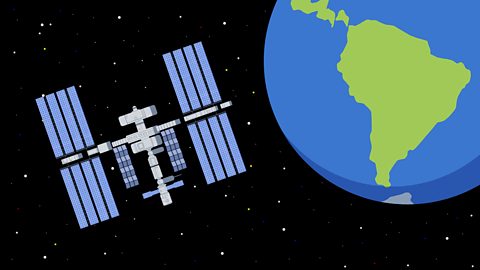
Spacesuits are designed to protect astronauts from temperatures as low as −156 °C.
On 18th March, 1965 Russian cosmonaut Alexei Leonov became the first person to perform a spacewalk.
It is theorised that astronauts could enter space without a spacesuit, but they would only survive for at most 15 seconds due to the extreme temperatures, pressure and radiation.
Spacecraft have heatproof tiles on the underside. These protect the astronauts from the high temperatures and prevent the spacecraft from being destroyed on re-entry. Re-entry temperatures can reach as high as 1,650 °C.
Construction on the ISS began in 1998, but new modules are added regularly to keep it up to date with technology and the latest research.
NASA has recorded over 170 million pieces of space debris orbiting the Earth, ranging in size from 1mm to much larger satellites.
All astronauts need to learn to speak and read Russian as it's used on the ISS and in the Soyuz space capsule.
Astronauts can grow up to 3% taller whilst in space, although they go back to normal when back on the Earth.
Slideshow: Life on the ISS
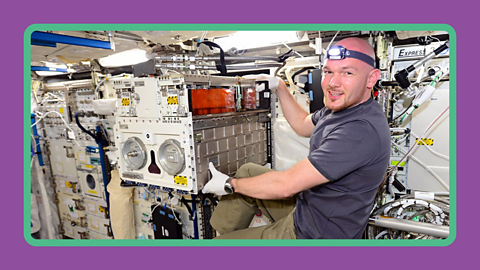
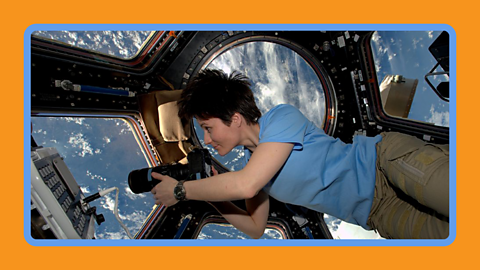
Explore the gallery below to find out what day-to-day life is like for astronauts on board the International Space Station (ISS).
Life on the ISS
- Image source, ESA/NASA

Image caption, The International Space Station is a habitable artificial satellite. It travels around the Earth at 17,000 mph.



1 of 9

Did you know?
The ISS travels at a speed of five miles per second
It completes 16 orbits of Earth every 24 hours.
This means that astronauts can see as many as 16 sunrises every day.
Watch: What happens to the body in space?
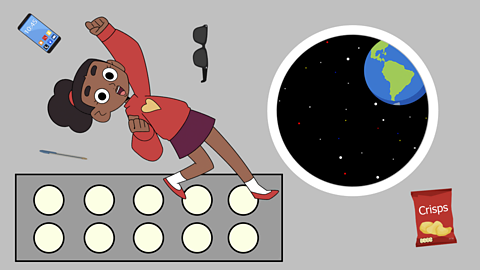
There isn’t an up or down in space, like we’re used to on Earth, so your brain can become confused. Astronauts often complain of feeling sick during the first few weeks on the ISS and their bodies usually take a little time to adjust.
Living in space has been described as being a bit like standing on your head. With less gravity pushing down on you, fluids tend to pool in the upper parts of the body. This gives astronauts a puffy, red face.
On the ISS the pull of gravity isn't as strong as on Earth. Your muscles don’t need to work as hard and your bones weaken. Each crew member has a strict daily exercise routine to make sure they don’t waste away.
Your heart muscle gets weaker as well, as it requires less effort to pump blood around the body in microgravity. Astronauts also typically grow a few centimetres taller in space.
Without the Earth’s atmosphere to protect them, astronauts are constantly bombarded by cosmic rays. These invisible waves zap the body and increase the risk of diseases.
Fran Scott explores what happens to the body in a vacuum. Archive: ESA, NASA
We've got a cosy life down here on Earth, with an atmosphere to protect us.
So it's difficult to imagine just how dangerous the vacuum of space can be.
Right now we've got air pressing down on our body.
Now that pressure doesn't crush us because, not only have our bodies evolved to resist that pressure, but also, we've got the same air inside our bodies pushing out with just as much force.
And also, we don't notice that pressure because it's been around us our entire lives, ever since we were born.
But space is a vacuum – there is virtually no air – so there is nothing pressing against your body.
And that's why astronauts have a pressurised spacesuit. But what would happen if Tim didn't have a spacesuit to protect him?
Well, meet marshmallow Tim, and he's going to show us what might happen to a body in space.
This is a vacuum pump and it can recreate the vacuum of space by removing the air from inside this bell jar.
So the pump is now removing the air and the pressure on his skin is smaller and smaller and as you can see as that happens his body is expanding, it's getting bigger and bigger.
And this is because there is no air in the vacuum to squeeze his marshmallow body and that allows the air that's trapped inside the marshmallows to push outwards, making them bigger.
But if we let the air back into the bell jar, the force of the air presses back down on our marshmallow man.
And that's what a spacesuit does; it keeps Tim's body under pressure.
Without it he'd probably only last about 15 seconds.
Which, to be honest with you, is a little longer than marshmallow Tim is going to last.
Mmm, quite tasty.

Did you know?
When astronauts land back on Earth, they are often carried out of the capsule because their leg muscles are too weak from their time in space.
Important words
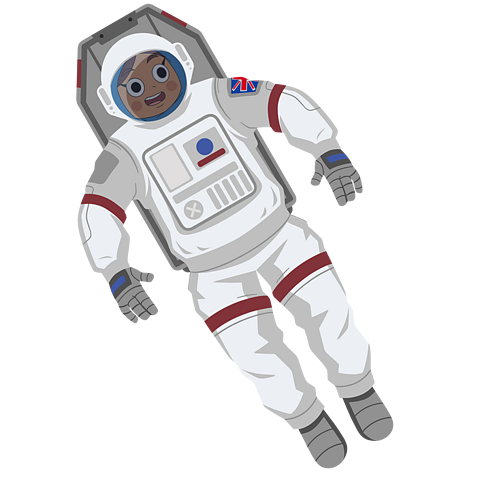
Astronauts – A person trained to travel in space. In Russia they are known as cosmonauts.
Cosmic rays – High energy particles that travel through space. They come from our Sun and from outside of our Solar System.
Gravity – A force that pulls things to the ground on Earth. It also holds planets, moons and asteroids in their orbits around the Sun.
International Space Station (ISS) – The largest space station ever built. It orbits the Earth in low orbit. Five international space agencies collaborate to keep it operational.
Radiation – Energy that moves from one place to another in waves or particles.
Spacesuits – A suit that protects astronauts from the harsh environment of space. It keeps the astronaut warm, provides air and water and protects them from cosmic rays.
Weightlessness – In space there is no gravity. Astronauts can float around and are weightless.
Activities
Activity 1 – Interactive spacesuit
Click below on the different parts of the spacesuit to find out more.
Images: ESA, NASA
Activity 2 – Take the quiz
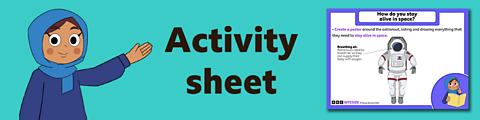
Activity 3 – Create a poster
New game! Horrible Science: Stinky Space. game
Join Pipette on her epic mission and learn some revolting facts about space along the way.
More on Earth and space
Find out more by working through a topic
- count11 of 14
- count12 of 14
- count13 of 14
- count14 of 14