Gravity
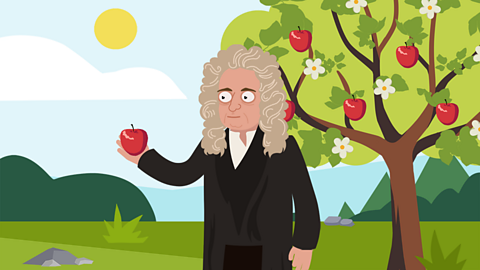
Have you ever wondered why when you throw something into the air it falls straight back to the ground?
This is because of gravity, an invisible force which acts on objects, pulling them towards the centre of the earth.
It is gravity that keeps us firmly on the ground and what makes objects fall.
Without gravity, everything on Earth would float away.
Gravity acts on all objects. The larger the object, the greater the gravitational pull it has.
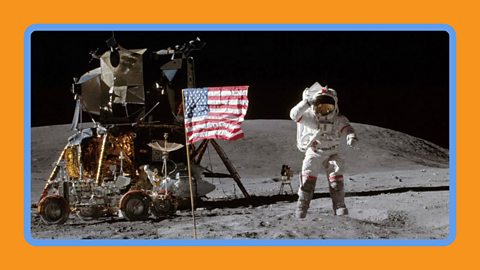
There is less gravity on the Moon than there is on Earth because the Moon is smaller than the Earth.
If you jumped on the Moon, it would take longer to return to the surface than if you jumped on Earth.
Why is gravity important?
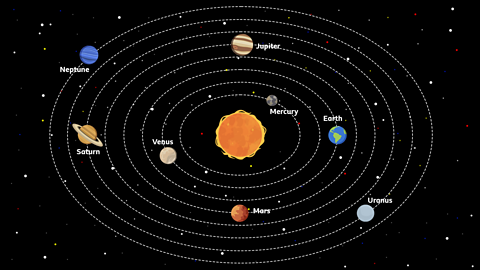
The Sun's gravitational pull keeps all of the planets in orbit.
The Earth's gravity keeps us just the right distance away from the Sun.
Gravity also keeps the Moon in orbit around the Earth.
The Moon's gravitational pull affects the oceans on Earth, as the Moon pulls water towards it, causing a change in the tides.
Gravity creates stars and planets by pulling together rock and gas.
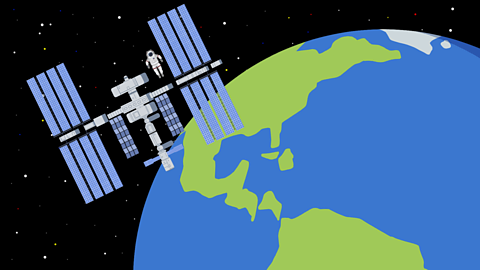
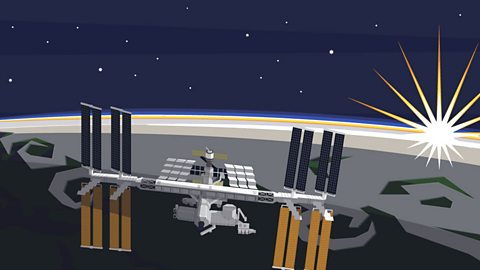
Without gravity, it would make everyday activities like eating and drinking very difficult. Our food and drink would simply float away from our plates and cups, which is what occurs in the weightlessness of the International Space Station (ISS).
Who discovered gravity?
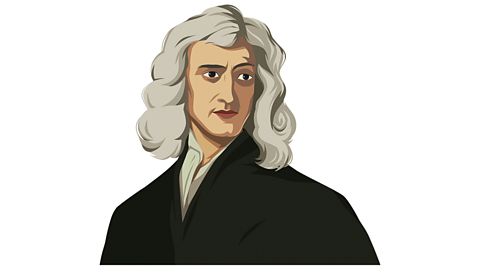
The English scientist, mathematician and philosopher Sir Isaac Newton discovered gravity.
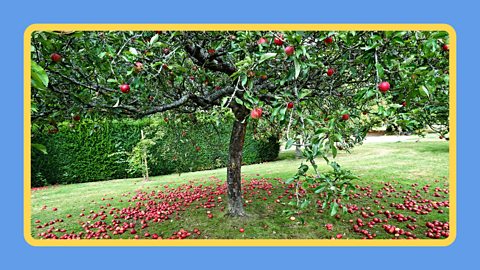
Newton saw an apple fall from a tree and began to think that there must be a force that exists, pulling the apple to the ground.
He carried out many experiments and he worked out that the force of gravity was linked to how heavy objects were and how far apart they are.
The heavier the object, the stronger the gravitational pull.
The closer we are to that object, the more we feel that gravitational pull.
Watch: Sir Isaac Newton and gravity
Find out about Isaac Newton and how he discovered gravity.
Isaac Newton – isn't he the guy who discovered gravity?
Great! So, what's gravity?
Aaaah, gravity is the force that makes objects fall towards the ground.
And, without gravity, we'd all float! Hmmmm…
You're right!
The force of gravity is weaker on the Moon than on the Earth, so here you can jump much higher!
Gravity also acts between the Moon and the Earth and keeps the Earth in orbit around the Sun.
Fascinating stuff!
And thanks for showing me the effects of gravity.
It's clearly a very important force!
Fascinating Facts
Jupiter is a much larger planet than Earth it has much more gravitational pull, so you would weigh more on Jupiter than you do on Earth!
Gravity actually causes you to shrink. Astronauts who have gone into space where the gravitational pull is less have returned to Earth 2cm taller than when they left!
The gravity on the ISS is about 90% of the gravity we feel on the Earth's surface, but because it's in orbit it provides the feeling of weightlessness.
A gravitational wave detected in 2015 occurred because of two merging black holes that emitted 50 times the power of all the stars in the Universe.
The physicist Albert Einstein used Sir Isaac Newton’s theories on gravity to develop his famous theory of relativity.
The Sun has a much wider gravitational field than Earth’s. It holds all the planets, moons and asteroids in our Solar System in orbit around it.
Slideshow: Gravity
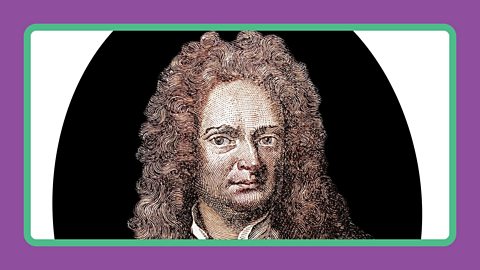
Image caption, Sir Isaac Newton
A contemporary illustration of the scientist Sir Isaac Newton (1643-1727), famous for his original theories on gravity. Gravity is the force that pulls things down to the centre of Earth (or other celestial bodies).
1 of 4
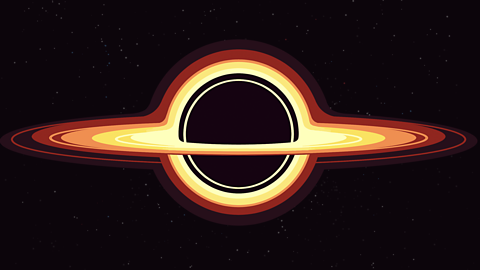
Did you know?
Black holes have such a strong gravitational pull that not even light can escape them!
Important words

Force – A force is a push or a pull that acts on an object due to interaction with another object.
Gravity – A force that pulls things to the ground on Earth (and other planets). Gravity also holds planets, moons and asteroids in their orbits around the Sun.
Gravitational pull – A force of attraction exerted by large bodies such as the Earth or the Moon.
Orbit – The curved path of a celestial object that moves around something else that has gravity, like the Moon around the Earth, or the Earth around the Sun.
Planet – A celestial body orbiting a star. The Earth and Mars are examples of planets which orbit a star (the Sun).
Stars – Giant balls of burning hot gases held together by gravity, like our Sun.
Tides – The rising and falling of the sea or ocean. It occurs usually twice a day due to the Moon's gravity.
Activities
Activity 1 – Fill in the gaps
Activity 2 – Quiz
Activity 3 – Testing gravity at home
New game! Horrible Science: Stinky Space. game
Join Pipette on her epic mission and learn some revolting facts about space along the way.
More on Earth and space
Find out more by working through a topic
- count8 of 14
- count9 of 14
- count10 of 14
- count11 of 14