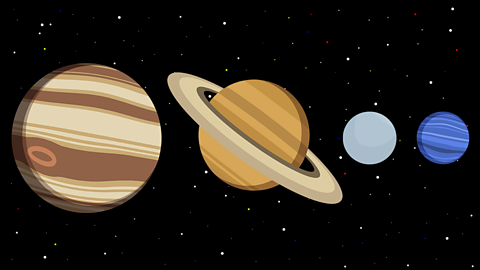
The Solar System

The Solar System is the name given to the part of space that surrounds the Sun.
Even though it is bigger than anything we can imagine, the Solar System is actually a very tiny part of the universe.
The Solar System is made up billions of objects, including planets, moons, asteroids and comets that are all held in the Solar System by the gravitational pull of the Sun which sits right at the centre.
Watch: The Solar System
This song helps us to remember the planets in our Solar System.
Narrator: Serious scientists, like myself, believe our Solar System was formed by the collapse of a giant cloud of gas and rock and is held together by the gravitational pull of the Sun.
Eight planets orbit the Sun.
The closest are the four rocky planets, the remaining gas planets inhabit deeper space.
The Solar System is also home to many other cosmic bodies including asteroids, moons and dwarf planets such as Pluto.
What's this? Oh noooo…
Stella: You should know where all the planets are, they orbit the Sun, which is actually a star.
Mercury and Venus, are first in line,
Earth used to have dinosaurs, but now it's our time!
Mars, is next, and rocky and red,
Jupiter made of gas, not somewhere you can tread.
Saturn's got rings, and is gas too,
Uranus then Neptune are cold and blue.
You should know where all the planets are,
They orbit the Sun, which is actually a star.
You should know where all the planets are,
They orbit the Sun, which is actually a star!
Fascinating facts

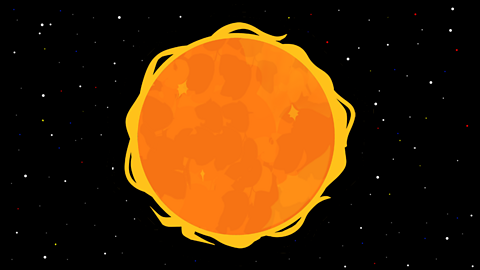
The Sun is a star. It is a big ball of the gases hydrogen and helium and makes its own energy from nuclear fusion.
You wouldn't be able to stand on any of the gas planets, that's because Jupiter, Saturn, Uranus and Neptune don’t have solid surfaces, although they do have a rocky core.
Saturn's rings are made of 90% water.
It only takes Mercury three Earth months to orbit the Sun.
The Solar System is roughly 4.5 billion years old.
The whole of Mars is as cold as our South Pole.
There are more stars in the Universe than there are grains of sand on all of our beaches on Earth.
The Great Red Spot is a storm twice as wide as Earth, and has been observed on Jupiter for more than 300 years.
Which planets make up the Solar System?
There are eight planets in our Solar System and each one is unique because of what it is made from and the distance it is from the Sun.
Rocky planets
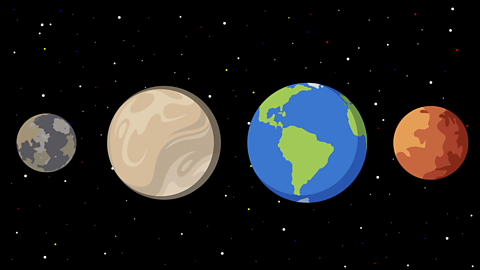
There are four rocky planets in our Solar System, these are:
- Mercury
- Venus
- Earth
- Mars.
They are the closest planets to the Sun. They each have moons but are smaller than the gas planets.
Gas planets
There are also four gas planets, these are:
- Jupiter
- Saturn
- Uranus
- Neptune.
These are the farthest planets from the Sun. They each have many moons and they are much bigger than the rocky planets.

Slideshow: The planets of our Solar System
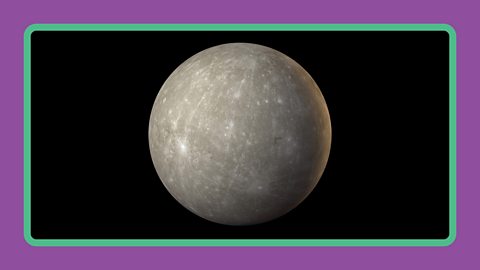
Image caption, Mecury
Mercury is the closest planet to the Sun. It is the smallest planet in the Solar System.
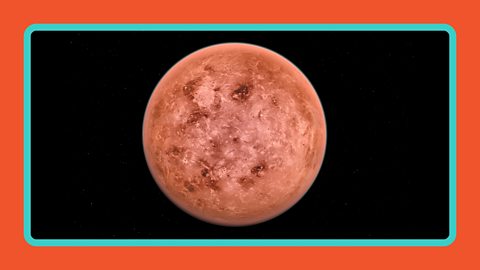
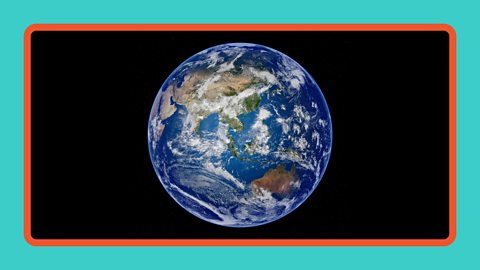
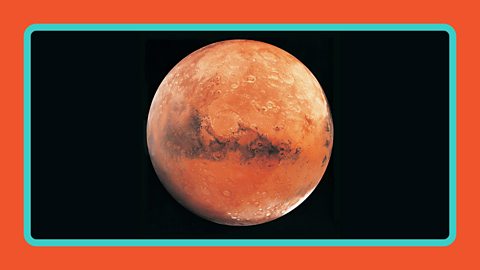
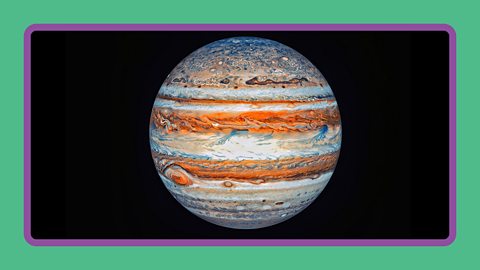
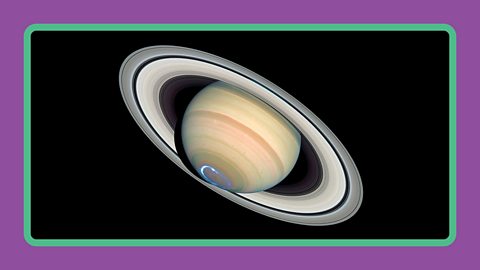
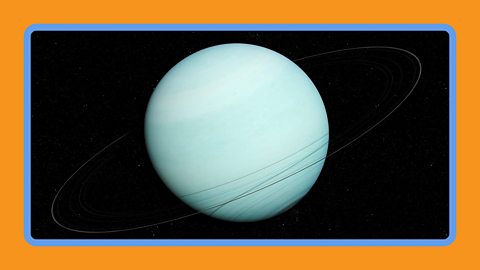
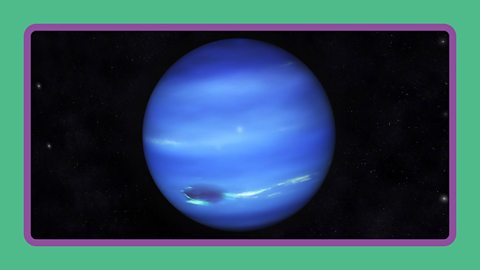
1 of 8

Did you know?
Until 2006, there were nine planets that made up our Solar System: Mercury, Venus, Earth, Mars, Jupiter, Saturn, Uranus, Neptune and Pluto.
Pluto was furthest from the Sun and smaller than any of the other planets.
After more research and after comparing it to other objects in the Solar System, it was decided to reclassify Pluto as a dwarf planet.
So whilst it is still in the same place in the Solar System, Pluto is no longer counted as one of the main planets.
Who was Nicolaus Copernicus?
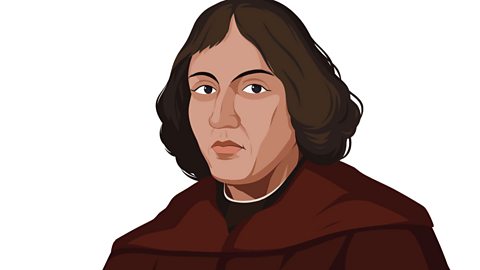
Nicolaus Copernicus was an early astronomer, scientist and priest from Poland, who had the theory that the Sun was at the centre of the Solar System.
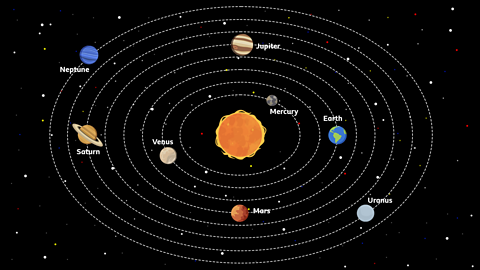
This theory was known as the heliocentric model. It was controversial as accepted wisdom at the time (supported by the church) was that Earth was at the centre of the Universe.
What is the heliocentric model?
Important words
Asteroid – A celestial body made of rocks and metal that orbits the Sun. Asteroids can often collide into other celestial bodies like the moon.
Astronomer – A scientist who focuses on astronomy. Astronomy is everything outside of The Earth including space, planets, moons, asteroids, galaxies, stars and the wider universe.
Gas planets – Planets made up of gas like hydrogen and helium, such as Jupiter, Saturn, Uranus and Neptune.
Gravitational – A force relating to gravity that attracts objects to one another.
Heliocentric model – The theory developed by the astronomer Nicolaus Copernicus that the Sun lies at a central point, orbited by other objects like planets and asteroids.
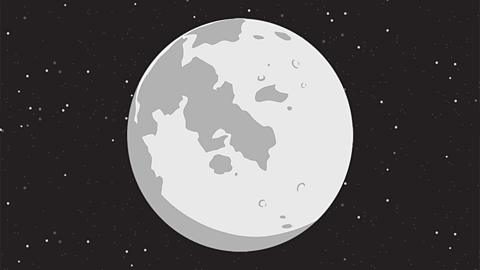
Moon – A moon is a huge ball of rock that orbits a planet.
Planet – A celestial body that orbits a star. Planets can be made up of rock, gas or a mix of both. The Earth is a planet.
Rocky planets – Planets made up of rock and metals, like Mercury, Venus, Earth and Mars.
Solar System – The Solar System is where Earth lies. It is a gravitational system of planets, dwarf planets, comets and asteroids that circle our Sun.
Star – A giant ball of hot gas held together by gravity. Stars emit huge amounts of heat and light. Our nearest star is the Sun.
Universe – Everything we know, including all of space and matter.
Activities
Activity 1 – Order the planets
Activity 2 – Solar System quiz
Activity 3 – Create your own Solar System

Create your own masterpiece of the Solar System.
You could paint it, use different sized objects or draw it. Don't forget to label it and add any facts that you know!
Can you create a mnemonic (a pattern of letters, words, ideas or associations which help with memorising something.) to help you the order of the planets?
Here's an example:
- My (Mercury)
- Very (Venus)
- Easy (Earth)
- Method (Mars)
- Just (Jupiter)
- Speeds (Saturn)
- Up (Uranus)
- Nothing (Neptune)
Activity 4 - Cut and order

New game! Horrible Science: Stinky Space. game
Join Pipette on her epic mission and learn some revolting facts about space along the way.
More on Earth and space
Find out more by working through a topic
- count3 of 14
- count4 of 14
- count5 of 14
- count6 of 14