Tropical rainforest ecosystem
Conditions and vegetation adaptations
Plants in tropical rainforests have adapted to survive in the hot, humid conditions. They need to compete with each other to get enough sunlight and to get the nutrients they need. Many have evolved to grow higher up or to find ways to make the most of thin, poor soil.
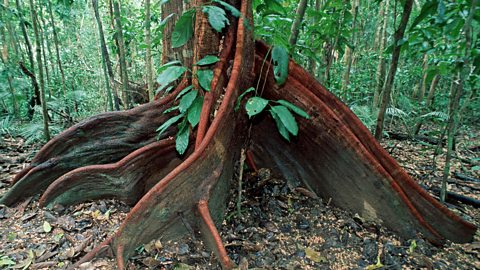
Image caption, Buttress roots
Rainforest soils are poor and most nutrients are in the top layers, so roots are generally shallow. However, shallow roots can't support huge rainforest trees, so they have grown buttress roots. Wide buttress roots join the tree far up and help to support it. They also allow it to gather more nutrients as they spread over a wide area.
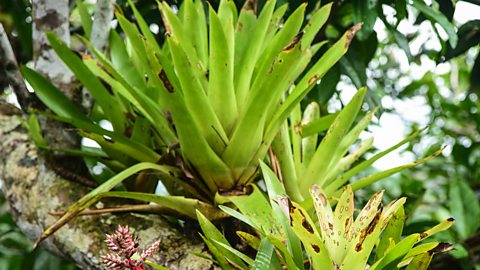
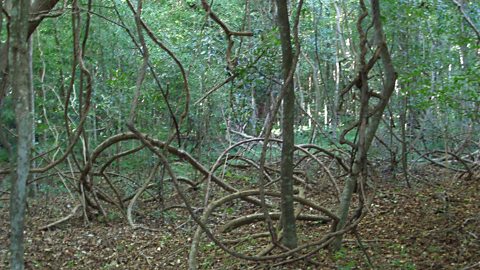
Image caption, Epiphytes
Epiphytes are flowering plants which grow high up on tree trunks and branches to get light. They get nutrients directly from the air and water, and their roots hang in the air. Some species of orchids are epiphytes.

Image caption, Lianas
Lianas are vines that grow up from the forest floor and use trees to climb up to the canopy, where they spread from tree to tree to get as much sunlight as possible.

Image caption, Carnivorous plants
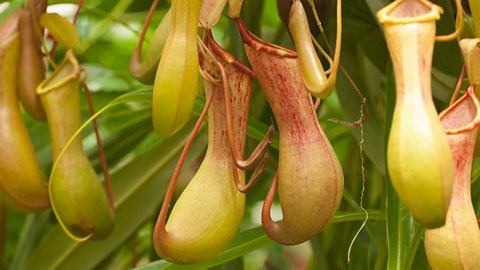
Carnivorous plants like the tropical pitcher plant are meat-eating plants that attract insects using smelly nectar and then trap them. As rainforest soils lack nutrients, these plants have adapted to get the nutrients they need from the insects they trap and digest.

Image caption, Drip tips
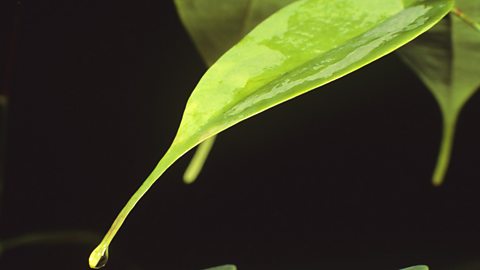
Plants grow thick leaves with drip tips and waxy surfaces to allow water to drain quickly to prevent rotting.
1 of 5