Saving snowy white mountain hares
People's Trust for Endangered Species (PTES)
Partner organisation of the Watches
By Nida Al-Fulaij, Grants Manager at PTES
Think of winter and memories of cold, crisp days come to mind, intertwined with the greyer and more windswept days. The contrast between bright and bleak days is represented by our native wildlife too; mammals such as hedgehogs and hazel dormice hide away and hibernate during the cooler months, whereas bright red robins are delightfully visible foraging for juicy winter berries.
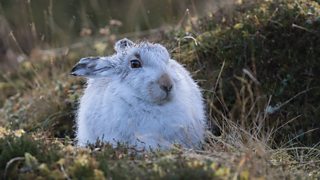
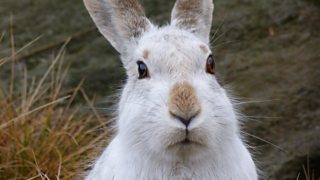
Snowy white mountain hares are one of a few species that cope with the annual contrast in weather, by adapting to the cold and camouflaging themselves against the landscape. More often these days wearing their white winter coats, they can be seen standing out against the brown and green landscapes of winter. Little is known about these bigger bunnies and they, like many other native species, could soon become just a winter memory if we don’t step in and help.
Mountain hares are in trouble
Mountain hares are in trouble; they died out in England around the last Ice Age, leaving only a few populations confined to Scotland and Ireland. In the 1880s, landowners attempted to reintroduce mountain hares back to England but, sadly, most attempts were unsuccessful.
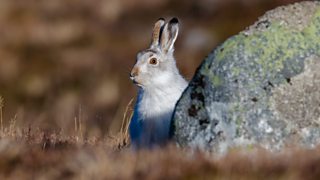
Against the odds, a small group of hares have survived in the Peak District, establishing a population across this northern national park. However, they’re facing many threats, including growing infrastructure around the park including an increasing number of roads. On top of this, change in our climate is having an impact. Mountain hares are well adapted for life on cooler, higher grounds and, with temperatures warming, they may not be able to adapt quickly enough to survive these changing times.
The Peak District’s hares are effectively an ‘island population’, meaning they’re isolated, without the opportunity to meet and mate with other mountain hares, and so at risk genetically. All the factors above, combined with the risk of hybridisation from their sister species, European brown hares, means England’s mountain hares are now classed as vulnerable to extinction.
Vital research is being carried out
Thankfully, work is being done to help. And at People’s Trust for Endangered Species (PTES) we’re doing just that. We’re funding Carlos Bedson, a PhD student from Manchester Metropolitan University, who is doing vital research into understanding the sustainability and viability of the remaining hares in the Peak District. Using camera traps, a high power thermal imager and transect observational surveys Carlos’ novel combination of surveying aims to evaluate the estimated number of hares left, their habitat preferences and the effects of human land use and infrastructure on the population. This is the first time all three techniques have been used together on mountain hares, and Carlos’ surveys will continue throughout spring.
If you’d like to help hares that might be living near you, report any sightings to the Hare Preservation Trust, who are also supporting Carlos’ research.
The journey to save mountain hares has just begun, but with the right conservation action, the future could be bright once again for this bigger bunny.
Find out more, about the Peak District mountain hares project