8 really important nature things that happened this week

Chris Hitchings
BBC Springwatch Digital Team
The weather across a lot of the British Isles may be turning more autumnal, but it has still been a busy week for British wildlife. Here's what you need to know.
1. Yorkshire's pine martens ended their three-decade-long game of hide and seek.
After more than three decades of being elusive, a pine marten trigged a motion sensitive camera on the North York Moors this week. It sparked excitement among fans of the house cat-sized mammal. There's now hope that more pine martens may be resident in the area. Their numbers are extremeley limited across the UK, their main stronghold being Scotland.
Read more (BBC)
The first appearance of a pine marten in Yorkshire for more than three decades.
2. Record number of hen harriers have been tagged.
The tagging was carried about by the RSPB and has seen hen harrier chicks fitted with satellite tags in an effort to discover why their numbers have declined so significantly.
Read more (BBC)
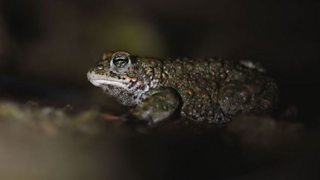
3. 'Baby boom' year for natterjack toads.
Five times as many natterjack toads have been counted at the RSPB Sandy reserve compared to 2016. The organisation says it believes there are around 500 of the protected species at the reserve. Natterjack toads have struggled post-war due to humans encroaching on their habitats.
Read more (BBC)
4. Night herons have set up roost in the UK.
The birds have settled in Somerset and are breeding for the first time in recorded history. It has been hailed as "incredible news" by Somerset Wildlife Trust. It's thought that climate change and restoration of wetlands has played a part in the birds choosing locations in the UK.
Read more (The Guardian)
5. An "inflated" hedgehog has been released back into the wild.
Named Monty by his rescuers, it is thought the hedgehog had been hit by a car. Its injuries caused air to become trapped under its skin, causing it to 'inflate'. Fortunately it was reported to the RSPCA who nursed Monty back to health, earlier this week he was released back into the wild near Doncaster.
Read more (The Yorkshire Post)
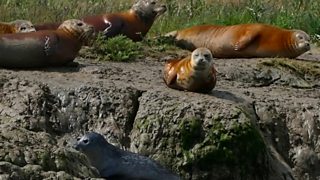
6. Seals in Essex get a 'fake tan'.
Essex Wildlife Trust filmed the mammals covered in iron oxide found in mud where they were bathing. The animals took on an appearance a little more orange than their usual look. The trust reported that the substance isn't harmful to the animals and washes off easily when they reenter the water.
Watch here (BBC)
7. Plans have been drawn up for the reintroduction of lynx in Scotland.
The big cat is to be reintroduced a mere 30 miles from Glasgow. Lynx once roamed Scotland before it became extinct 1,300 years ago. Plans have also been drawn up that could see it brought back to Keilder forest in Northumberland.
Read more (BBC)
8. And finally, anyone for a kick-about?
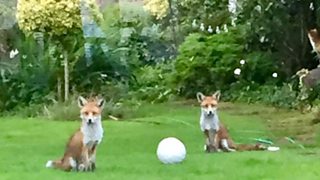
A group of eight suburban foxes in Leicester had their 15 minutes of fame this week as they were spotted having a kick-about. Fans of the beautiful game speculated on whether they are new signings for former Premier League champions Leicester City. Rather aptly the East Midland's football club's emblem is, you guessed it, a fox.
Read more (BBC)
----
Remember you can follow BBC Springwatch year round on social media. For updates on the most important British wildlife stories make sure you follow us on Facebook, Twitter and Instagram. You can share you photos in our Flickr pool.
----
About the author
Chris Hitchings is the social media producer for BBC Springwatch. He looks after the website, makes videos, sounds and updates the Watches Facebook, Twitter and Instagram accounts. You can see more of his work for BBC Springwatch here.
The BBC is not responsible for the content of external sites.