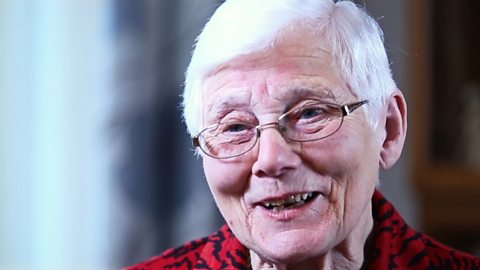
My war really started when I came to Britain. I couldn’t speak the language I didn’t know who I was. I was traumatised. Couldn’t talk. Didn’t want to talk. They thought I was dumb. I didn’t speak.
When I was growing up. I was about 17. I was going to go and join the army and I was going to go over there and kill them all. That was my anger. I hated them. I couldn’t bear to hear the German accent. And it made me very cautious and never wanting to go anywhere near those countries or associate with anything that had to do with Germany for a long time.
I believe that because they’re going to keep the Holocaust Memorial Day in perpetuity, I hope, and that there are certain places like Yad Vashem and Beth Shalom who have a memorial to the Shoa, which is the Holocaust. I do believe that it should be at least remembered. Yes I do, I do. I think it should be taught, you know, in perpetuity. Because even if it is not the Holocaust, the other story Rwanda, Syria, Yugoslavia should be told. They should be kept alive in the memory of people. They shouldn’t be allowed to be forgotten because that way things will, because we’re human. We will forget.
I look at my sons, I look at my grandchildren , I look at my great grandson and he’s a fabulous little boy and I’m just very happy about what I have achieved. And every day I say “Thankyou” about ten thousand times a day “Thankyou”!
Video summary
Suzanne Ripton, a Holocaust survivor who now lives in the UK, discusses the traumatic after effects of her experiences, her hatred of the Nazis and why we should remember the Holocaust.
Suzanne did not know of the war’s end in 1945 and was still in ‘hiding’ in 1947. Years later, Suzanne found out that both of her parents were killed at Auschwitz.
This short film contain scenes which viewers may find upsetting – teacher review is recommended prior to watching with your pupils.
Teacher Notes
Discuss with you class how the events and individuals involved have helped shape history and our understanding of history.
What influences have these events and indidviduals had on society, communities and relationships today?
How has our understanding of history changed? Why is it important for these stories to be shared with new generations?
This topic appears in history at KS3 and KS4 / GCSE in AQA, OCR A, OCR B, EDEXCEL, EDUQAS and WJEC GCSE in England and Wales, and CCEA GCSE in Northern Ireland.
It is also on the curriculum for 2nd, 3rd and 4th Level, National 4 and 5, and Higher in Scotland. It also appears in Modern Studies/PSHE/PDE at KS3 and KS4.
Suzanne’s Story - Hiding from the Nazis in occupied France. video
Suzanne Ripton’s story of living in hiding, as a Jewish child in Nazi-occupied France.
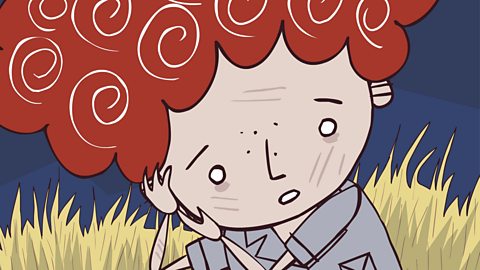
Arek’s Story - Survival in Auschwitz-Birkena. video
Arek Hersh recounts his experience as a prisoner, at the age of only 14, in the notorious death camp at Auschwitz-Birkenau.
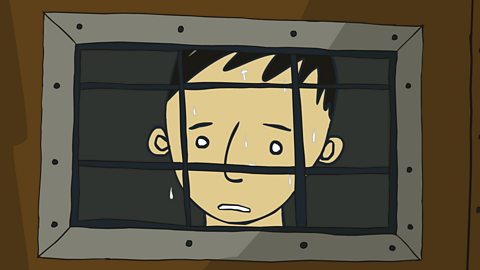
Interview with Holocaust survivor Arek Hersh. video
Arek Hersh, an 85-year-old concentration camp survivor expresses his anger for what the Nazis did to him. He talks about why it’s important for him to tell his story to others.
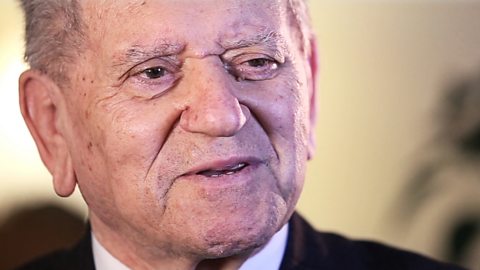
Heinz’s Story - Kristallnacht and escape to Britain. video
Holocaust survivor Heinz Skyte on life in Nazi Germany and his escape to Leeds in the UK.
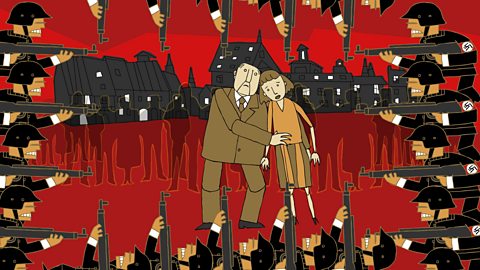
Interview with Holocaust survivor Heinz Skyte. video
Heinz, a Holocaust survivor, reflects on his childhood experiences in Nazi Germany.
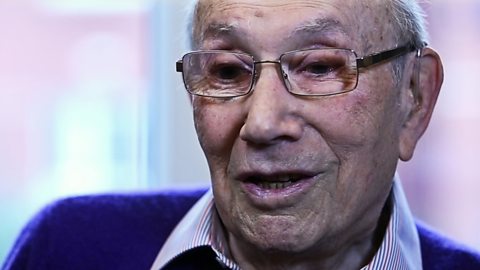
Martin's Story - Interrupted childhood experiences of a young Holocaust survivor. video
Martin Kapel, a survivor of the Nazi Polenaktion ("Poland Action") in October 1938, relates his childhood that included expulsion, escape and bombing.
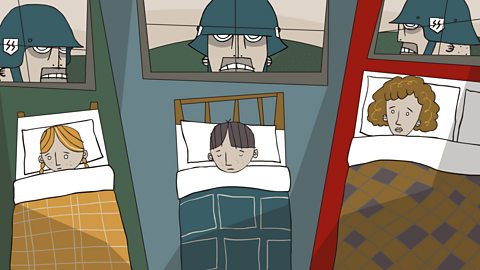
Interview with Holocaust survivor Martin Kapel. video
Martin Kapel came to the UK via the Kindertransport, following the Nazi Poland Action in October 1938. He reflects on the importance of studying history in order to learn from the past.
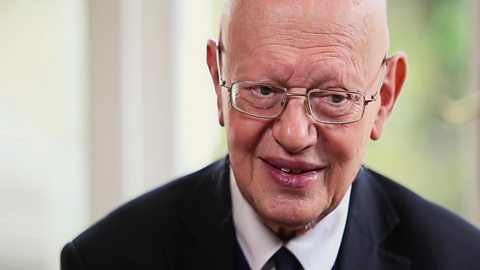
Ruth's Story - Escaping the Nazis as war began. video
Jewish girl Ruth Rogoff escaped from Germany and arrived in Britain on 3 September 1939. She relates her childhood experiences and talks of her mother’s remarkable courage.
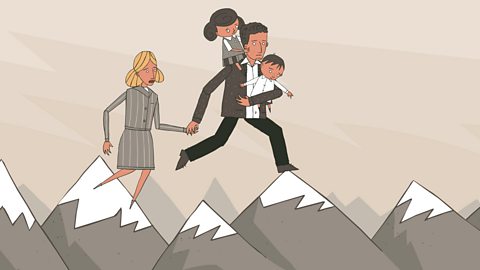
Interview with Holocaust survivor Ruth Rogoff. video
Ruth Rogoff discusses her memories of the Holocaust and details the horrors of watching footage from concentration camp Bergen-Belsen at her local cinema.
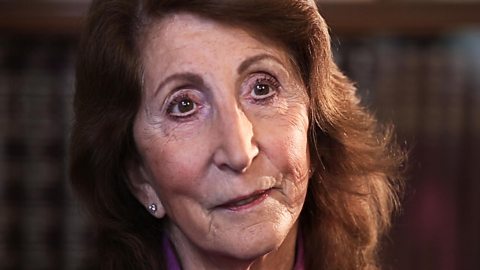
Trude’s Story - Escaping from Nazi occupied Czechoslovakia. video
In this animation, Trude Silman describes her experience as a young Jewish girl living in Nazi occupied Czechoslovakia, and escaping to Britain in 1939.

Interview with Holocaust survivor Trude Silman. video
Trude Silman, a Holocaust survivor who escaped to the UK, reflects on the impact of her experiences and how it has shaped her subsequent beliefs.