Divorced, Beheaded, Died: Who Were The First Three Wives Of Henry VIII?
Professor Suzannah Lipscomb is fascinated by everything in the Tudor period – and where better to start than the six wives of Henry VIII?
The National Portrait Gallery in London is hosting a new exhibition called Six Lives, displaying the images that have shaped our perception of Henry VIII and his queens. It was just the excuse Suzannah needed to delve into each of their stories.
Across six episodes of Not Just the Tudors on BBC Sounds, Suzannah is joined by experts to explore their legacies. We may think we know everything already, but beyond their (mostly) doomed marriages to Henry VIII – and in many cases tragic ends – here were six women who shaped history in their own unique ways.
Here are just a few details we learned from the first three episodes.
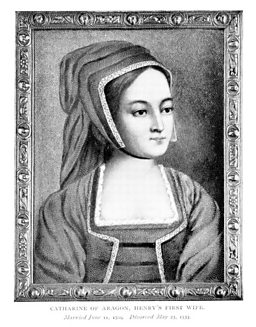
Catherine of Aragon
Catherine of Aragon had a cosmopolitan attitude. A Spanish princess by birth, Catherine was exposed to various cultures in her early life. As historian Theresa Earenfight explains, the Iberian peninsula was a diverse place in the 15th and 16th centuries. “While travelling around, you’d run across at least 10 different languages, different landscapes, different customs, different ways of eating; whether it's ocean or the Mediterranean or the high plains or the mountains in the north. It was a crossroads of trade, where she saw people coming back and forth. There were Muslims, Christians, Jews; there were Africans, and people from the east. [Catherine] had an expansive outlook because she travelled around.”
Catherine was the first woman ambassador in history. First as Princess and later as Queen, Catherine acted on the Renaissance ideas she learned during her classical education under her mother, Isabella I of Castile. For instance, unlike previous royal women anywhere in Europe, she could read Latin at just 11 years old.
By the time she was queen, Catherine’s education had prepared her for a role most unusual for a woman in England – as an ambassador. Dr Michelle Beer explains: “Catherine was a little bit older than Henry. She had a lot of political experience before she married him, so she really understood the political landscape of Europe at the time. She became a foreign policy advisor to Henry in the early years of their marriage. But she was also a very vibrant participant in the Tudor court.”
As Michelle points out, Catherine’s personality had another side. “We sort of tend to think of her as a kind of short dowdy lady who isn't very fun and is depressingly religious. But especially in the first decade or two of her marriage to Henry VIII, she's participating in all of the joys and the fun of the Tudor court. She is really his partner politically, culturally and socially. And that made it an interesting dynamic.”
Catherine of Aragon’s emblem was the pomegranate. On her way to England, she adopted the pomegranate as her heraldic device. Art historians in England use this important symbol to date artistic works, manuscripts and other records back to Catherine.
“It was so important to her,” says Theresa Earenfight. “It was part of her badge which shows up on her coronation oaths. [It represents] that notion of fertility, a sense of fullness, health.”
Michelle adds: “It has the notion of fertility and has links to Christ. It was also a very foreign thing in England, and Catherine wanted to mark herself as someone new, as someone who was bringing something different and exotic, in a way.”
Anne Boleyn
Henry VIII wrote Anne Boleyn 17 love letters. So it’s safe to say Anne's romance with Henry was not kindled overnight. “Some of the letters were in English, some in French,” historian Natalie Grueninger says. “They're in the Vatican, and in one of the first letters, Henry says that he's wanting an answer from her, to clarify what their relationship is about. He says this, ‘having been for more than a year now, struck by the dart of love’.
“To me, this sounds like he has been pursuing her for at least a year, and that perhaps Anne hasn't known how to react. Perhaps she felt guilty; she was serving Catherine of Aragon, a beloved queen. At some point, there's a shift, and she feels like this is her path. But I don't for a second think that she was the one chasing him.”
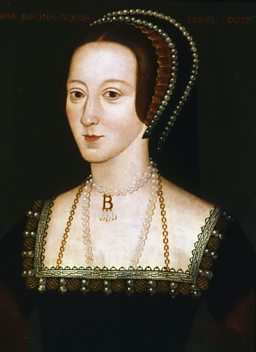
There are no known large-scale portraits of Anne Boleyn painted during her lifetime. Dr Charlotte Boland points out: “The most familiar images of Anne are of her in a French hood, often against a green background with her ‘B’ pendant.” But this is an Elizabethan image, painted after her death in the late 16th century.
“It has long been wondered whether that image might be based on a lost painting produced during Anne's reign, which is plausible. But it is equally possible that it is a complete construction of the Elizabethan period. An artist was confronted with the question of the celebration of Elizabeth and wanting to celebrate her mother – so how do you make an image of Anne?”
Anne Boleyn was highly intelligent and engaging. As historian Owen Emmerson notes, you can see evidence of this in her writings. “In her books of hours (prayer books), she writes the most poignant and beautiful couplets. Everyone that knew her said how engaging and vivacious she was. She had a wonderful character, and a keen intellect. I would argue that she was on a par with Henry in terms of being able to debate. And I think that engagement underpinned a lot of the turmoil that their relationship went through.”
For centuries, we have built up an image of Anne as a beautiful femme fatale. But maybe, Suzannah suggests, we need to imagine a radically different iconography of Anne. “Perhaps it's time to reckon with the idea that maybe Anne was not beautiful, she was just brilliant.”
Jane Seymour
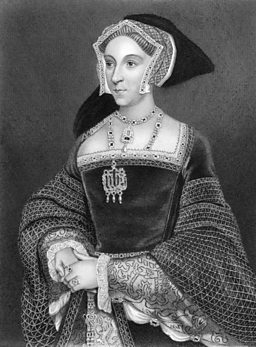
Jane Seymour remains a relatively elusive queen. To attempt to understand her is to piece together a puzzle. Dr Elizabeth Norton explains: “She is very much treated as this figure that we can't really see. She's seen as a bit boring and a bit plain. I think that comes down to the fact that we can't see the vivid detail of her life. We never see inside Jane's head. Even surviving letters are very official, and we don't have any personal correspondence.”
But recent research suggests that Jane was not quite Anne's antithesis in terms of character, in the way that we have imagined her to be. “Perhaps we've all been falling, as Henry did, for Jane's own deliberate self presentation,” Suzannah says.
Jane’s motto was “bound to obey and serve”. Not only was it a mission statement, but it also carried connotations of Catholic orthodoxy. “It’s a very interesting motto,” Dr Aidan Norrie says. “In some ways, I'm always tempted to read it almost as a direct smackdown of Anne Boleyn, because it is very clearly distancing from Anne's form of queenship.
“But while Jane obviously has to be on board with the Royal supremacy, she doesn't really have a choice in the matter. She is still very clearly what you might call traditionally Catholic. If queens are the earthly embodiment of the Queen of Heaven, it makes sense that's the motto she would choose.”
Jane was more outspoken than you might think. Despite her motto and various portrayals throughout history, Jane was opinionated on matters of religion and politics.
As Elizabeth Norton explains: “It was claimed that she actually spoke out for the rebels the Pilgrimage of Grace (a revolt against King Henry VIII's break with the Catholic Church in 1536-37), where she put herself on her knees before Henry and said, ‘Do you think this might be God's judgment for you, ruining so many churches?’ That's very outspoken, and was against what the king himself was thinking.”
In the Second Succession Act of 1536, there was provision made for Jane Seymour to become regent should Henry VIII die while their child was still a minor. “When Henry was considering going against the rebels himself in the Pilgrimage of Grace, he was going to leave Jane in charge of the council at Windsor – which again suggests that she has some level of political input. From what we can see of Jane, she was quite politically active.”
More from the BBC
-
![]()
Betwixt The Sheets
Sex historian Kate Lister uncovers stories that’d make your history teacher blush.
-
![]()
Short History Of...
Witness history's most incredible moments and remarkable people.
-
![]()
The Rest Is History
Tom Holland and Dominic Sandbrook are interrogating the past to de-tangle the present.
-
![]()
After Dark: Myths, Misdeeds & the Paranormal
The podcast that unpicks history’s spookiest, strangest, and most sinister stories.