'Why I'm donating 100 litres of my breast milk'

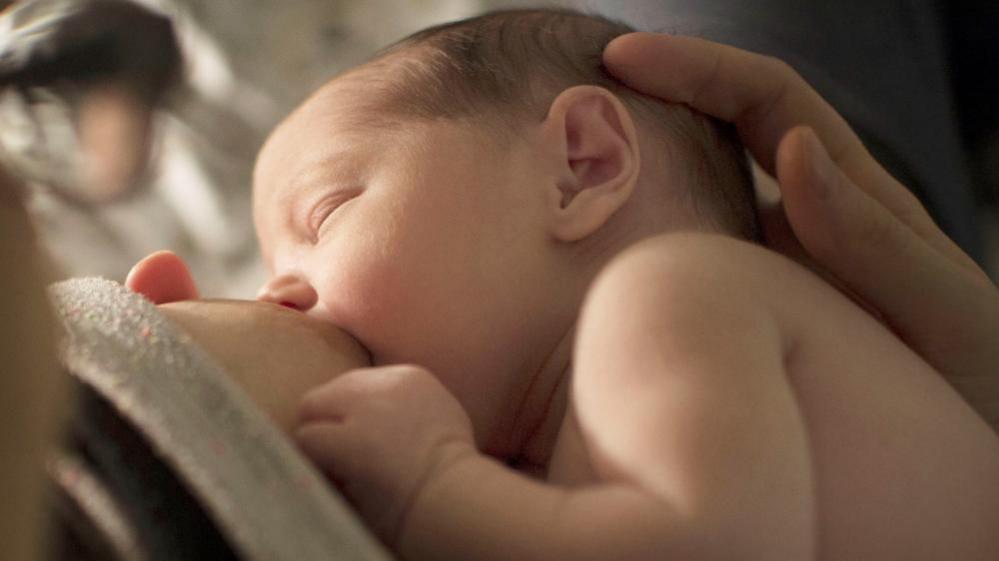
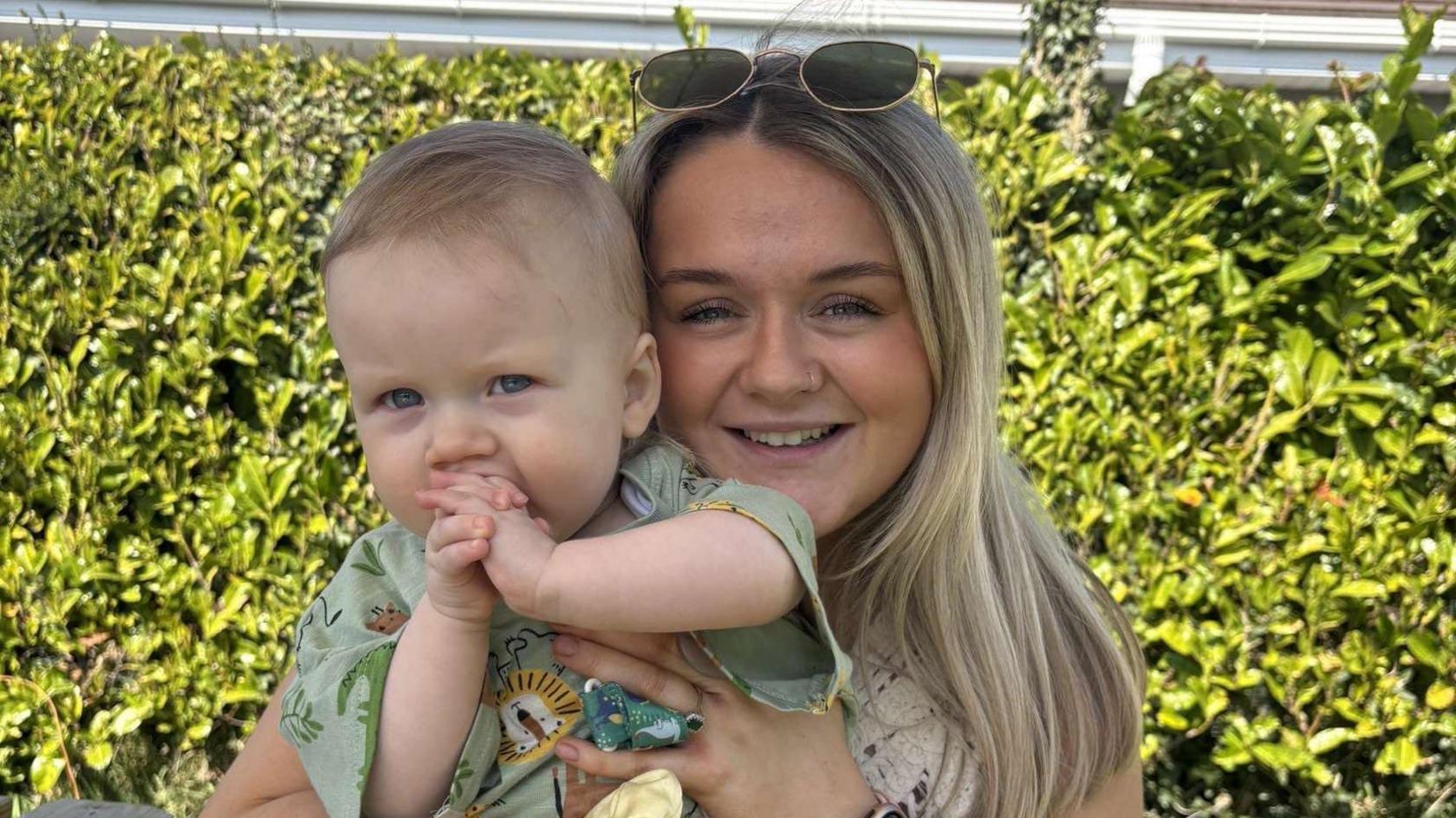
Emma said donating her breast milk had been "such a worthwhile thing to do"
- Published
Emma's son Bert was born in November 2025 at the Princess Royal Hospital in Telford with Down's syndrome and oesophageal atrisia, a birth defect which means food can't reach the stomach.
At three weeks old, he contracted sepsis. He spent 16 weeks in intensive care at Birmingham Children's Hospital, unable to drink his mother's milk.
In those difficult moments, Emma made a decision. "I sat there thinking I'm going to have a lot of milk to give away. I saw a number of mothers that really struggled to express milk. I thought, let's donate mine to other neonatal babies."
Emma has since donated 90 litres (160 pints) of breast milk to the Human Milk Bank , externalat Birmingham Women's Hospital.
The facility is the only one of its kind in the Midlands, supplying 1,900 pints of milk in the last year to premature and sick babies across the region whose mothers are unable to breastfeed.

Bert was nil by mouth while he was in intensive care, meaning Emma was unable to breast feed
The milk bank recently celebrated its 75th birthday, and is urging mothers with babies under one year old to consider donating, if they find themselves with excess breast milk.
The milk bank's manager, nurse Donna Hearnden, said demand often outstrips supply, forcing them to appeal for new donors to sign up.
She described the service as "extremely vital", adding that "we have a lot of babies that are born premature, and they need breast milk. We think of it as a medicine and it can absolutely help to save their lives."
Those signing up are subject to a blood test and lifestyle questionnaire to ensure donated milk is suitable for the babies who receive it.

Consultant Neonatologist Dr Gemma Holder said donor milk gives mothers who cannot breastfeed the time and space to allow their own supply to come in
Emma, from near Oswestry in Shropshire, uses a pump to express milk for half an hour at a time, up to four times each day. Milk is decanted into storage bags, frozen, and then picked up by the Blood Bikes, external charity and taken to Birmingham.
Milk is then checked, pasteurised and stored at the Human Milk Bank until it is needed.
Dr Gemma Holder, a consultant neonatologist at Birmingham Women's Hospital, said many parents of premature or sick babies are unable to express milk, "either because they live far away, or they're not able to visit due to other commitments, or they're really sick, which is the reason the baby was born early."
She added that stress can also inhibit the production of breast milk: "By providing that donor milk, it takes the pressure off. It gives them something which is beneficial to their babies, giving them that space to allow their own milk supply to come in."
NHS England recommends giving nothing but breast milk, external to babies for the first six months of their life. It can reduce the baby's risk of infections, diarrhoea and vomiting, sudden infant death syndrome (SIDS), obesity, and even cardiovascular disease in adulthood.
Emma, who works as a senior lecturer specialising in dairy cow production, said she wanted to donate 100 litres by Bert's first birthday in November to "give something back" to the NHS, which she said was "absolutely phenomenal".
"Knowing I can help other mothers, parents and tiny babies who were in our situation is a real privilege."
Get in touch
Tell us which stories we should cover in Birmingham and the Black Country
Follow BBC Birmingham on BBC Sounds, Facebook, external, X, external and Instagram, external.
Related topics
- Published6 May 2025
- Published27 July 2025
- Published28 May 2024


