Chip shop looks to future as it marks 50 years

Harry Haralambous took over the business from his father 30 years ago
- Published
The owner of a fish and chip shop that has just celebrated 50 years of business has said rising bills and competition meant there had never been a tougher environment for takeaways.
Harry Haralambous took over Salop Fish Bar in Oswestry from his father, Peter, 30 years ago and said a lot had changed since it first opened in 1976.
At its peak, his father sold two tonnes of chips a week, compared with half a tonne now.
Energy bills have gone up in recent years, while the war in Ukraine has hit the price of fish, and now farmers are warning that the Iran war is likely to increase the price of potatoes.
Both conflicts have squeezed the supply of fertilizer, which potato growers depend on, while April's increase in National Insurance and rise in the national minimum wage has also been absorbed by businesses.
"It's not just the price of oil, it's the price of everything," Haralambous said.

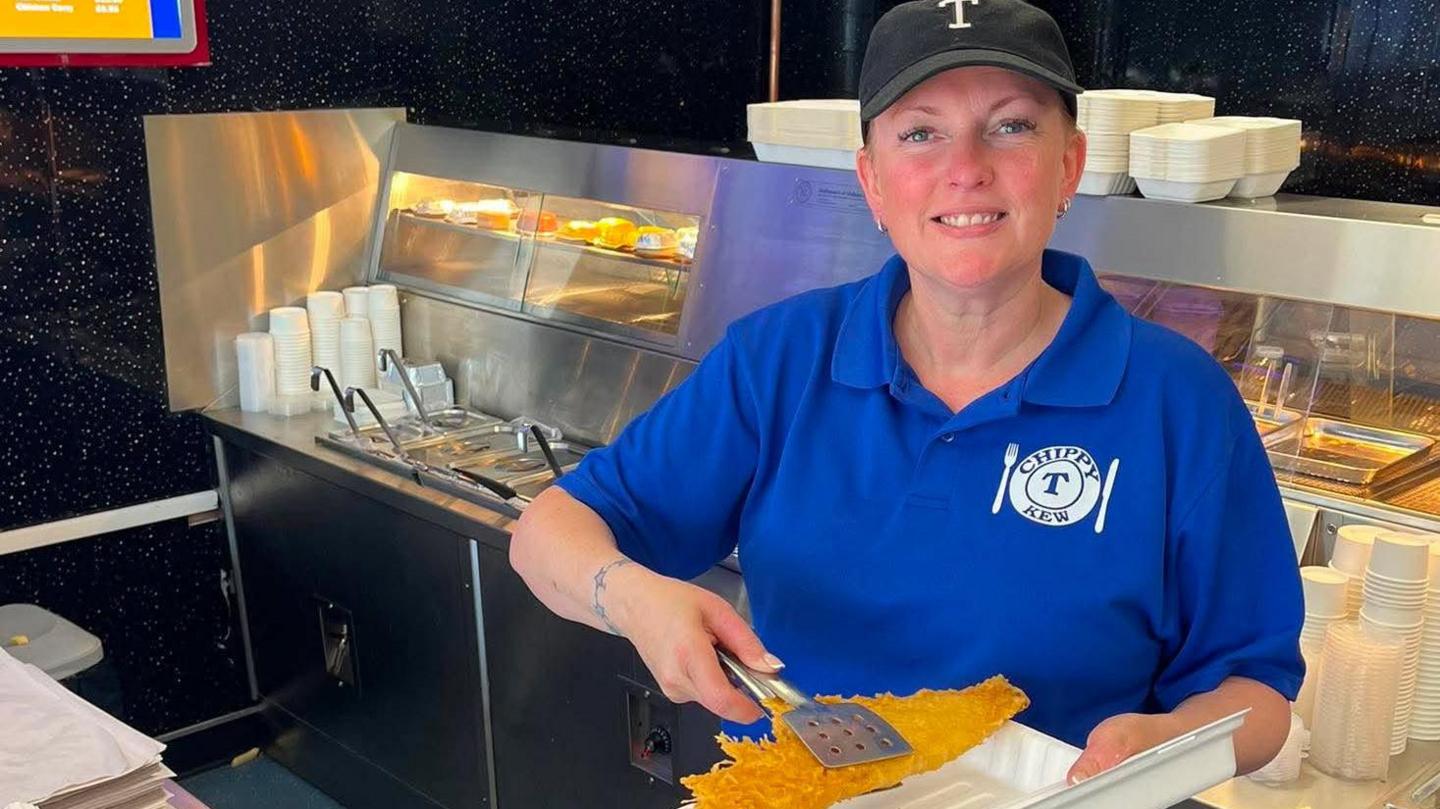
Sharon Carruther joined the staff when she was 14 years old
He added that higher wages had made it harder to employ as many staff, meaning fewer jobs for young people in the town.
"It's just made it very difficult for small businesses to grow."
Haralambous was six when his father started the business, watching it grow first-hand.
Over five decades, the business has expanded from a small shop with seating upstairs to occupy the shop next door, a sweet shop on the corner, a little cottage and a former video shop.
"I've seen people that have come in and then their kids come in and now their grandkids are coming in."
He recalled huge queues forming after local cinema screenings ended and last orders were called at 23:00.
"Friday and Saturday would be very busy that last hour 11pm until 12am," he said.
"That was quite good, [but] that all changed when the licensing laws changed."

Peter Haralambous, pictured in the shop in the 1980s, opened Salop Fish bar in 1976
A report earlier this year from industry body Seafish, external said there were about 7,210 fish and chip shops in the UK.
It recognised the challenges faced by business owners due to rising food and energy costs and called for the sector to be monitored due to the dish's cultural importance.
Haralambous said the number of takeaways in the town had risen dramatically over the past 50 years.
"It's not like it was 30, 40, 50 years ago when there were two or three chip shops selling hot food," he said.
"[Today] there's so much competition, every other shop does hot food.
"Every corner shop sells a hot pasty or a sausage roll, takeaways, kebab shops, every supermarket [too]."

The business has expanded into neighbouring units over the years
Small and medium-sized enterprises (SMEs) make up the lion's share of the UK's private-sector economy, and together are the largest overall employers.
Sharon Carruthers, who first started working in the shop aged 14, said she walked in one day to ask for a job, after her mother had worked there.
She said she started work the following week.
"To be honest I was quite terrified then, but now it's a home from home," she said.
Despite the challenges, Haralambous said the shop remained rooted in the community, and he celebrated the business's 50 years by handing out cake.
Get in touch
Tell us which stories we should cover in Shropshire
Follow BBC Shropshire on BBC Sounds, Facebook, external, X, external and Instagram, external.
Related topics
More stories like this
- Published28 October

- Published21 October

- Published10 July