Big Garden Birdwatch 2022

RSPB
Partner organisation of the Watches
By Beccy Speight, Chief Executive of the RSPB
Over the past two years, we have all had to navigate the difficulties and uncertainties which the Covid-19 pandemic has brought. But over one weekend in January, we can take a moment to put aside our worries and simply enjoy the beauty of nature on our doorstep with the RSPB’s Big Garden Birdwatch.
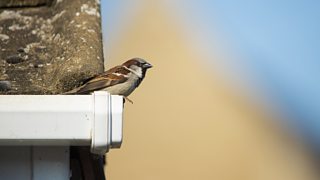
House sparrow was the most spotted species in the Big Garden Birdwatch 2021. Credit: Ben Andrew RSPB Images.
Be One in a Million
Last year, more than a million amazing people took part in the Birdwatch – the world’s largest garden wildlife survey – making it a record-breaking year, with 17 million birds counted. It’s evident how vital the natural world has become for our mental health and wellbeing. For many, there was a reconnection with nature during the pandemic and lockdowns, which had perhaps previously been lost to our hectic lifestyles. For others, the pandemic prompted a first awakening to the wonder of nature, with the Big Garden Birdwatch being a window onto the wider picture of the global nature and climate emergency and how each of us can play our part.

This year will be the 43rd Big Garden Birdwatch. Credit: RSPB Images
43 Years of Citizen Science and Counting
The brilliant thing about the RSPB’s Big Garden Birdwatch is that anyone can take part, spending just one hour over the weekend of 28-30 January watching and recording the birds in your garden, balcony or local green space. Even if you don’t see any birds during your watch, letting us know that is really important.
It’s a phenomenal example of collective citizen science, and with 43 years’ worth of results, we have some incredible insight into how our common garden birds are doing across the UK. It’s thanks to all of you that we can analyse which species are doing well - such as great tits, which have seen a 57% increase in 42 years - and which are struggling. Starlings, for example, were the third most spotted bird in 2021’s Birdwatch, so we may think they are thriving - but we also know their numbers are down 83% since 1979.
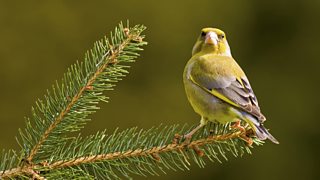
Regularly cleaning feeders is vital to help stop diseases spreading to our garden birds, like greenfinches. Credit: Ben Hall RSPB Images
Play Your Part to Stop the Decline
Sadly, over the last 50 years, we have seen 38 million birds lost from our UK skies. For garden birds, the reasons for the decline are complex, from challenges such as fewer nature-rich green spaces to a changing climate. As individuals and as a society, we can give a helping hand, especially in winter when natural food sources are scarce. Providing food, shelter and water is crucial and we have a great guide on ways to attract and help birds in your garden, including where to situate feeders and tables and which food is favoured by blackbirds, blue tits, goldfinches, and other species which may visit. Again, you don’t need a garden to do this as window feeders are also a great way of enjoying birds close-up.
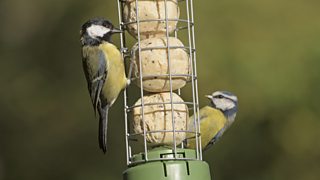
Putting food out for the birds in winter is particularly important as natural resources are scarce at this time of year. Credit: RSPB Images
Don’t Forget to Clean Your Feeders!
While feeding birds is a crucial part of helping birds – and, of course, boosting the chances of increasing our Birdwatch tally! - keeping feeders, tables and baths clean is vitally important, to stop the spread of diseases such as trichomonosis, which can especially affect greenfinches. Since 1993, these delightful birds have seen a dramatic decline of 63% and have now been moved to the Birds of Conservation Concern most-threatened red list. By taking the time to clean, we can help halt and reverse the decline of greenfinches as well as keeping the rest of our garden birds healthy. There’s a simple step-by-step guide on how to do so here.

Need help identifying what birds you see during your Birdwatch? We can help! Credit: RSPB Images.
Take Part, Join In and Enjoy!
Amidst the January gloom, when the days are still dark and the festive season becomes a distant memory, the warm comfort of the Big Garden Birdwatch is something I always look forward to and I know many of you do too. So please join in, tell us what you are seeing using #BigGardenBirdwatch on social media, and for an hour, simply enjoy the wonder of nature.
- Big Garden Birdwatch takes place over the weekend of 28 to 30 January 2022.
- Big Schools’ Birdwatch takes place from 5 January to 21 February 2022. Schools can take part here.

Beccy Speight, chief executive of the Royal Society for the Protection of Birds (RSPB)