Looking back as a Production Apprentice
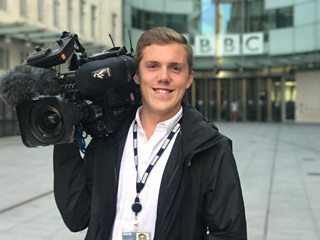
“So, what do you do for a job?” people ask - as is one of a few standard questions banked away for spontaneous small-talk with new people you meet – “I point a camera for a living”.
Well, it is more than just pointing a camera. 30 years ago, I would be three people (a cameraman, soundman and a spark/lighting man) - now I do all of that, as well as facilitate live broadcasts and make stuff for digital and other outlets, for BBC News. I’ve had the privilege of working on some of the biggest stories, filmed most of the royals, been part of some key events like D-Day 75 and worked with most of the BBC’s on-air editors on a whole eclectic mix of projects.
If someone had told me I’d be doing the job I do now, at the age of 21, I’d have said you were mad.
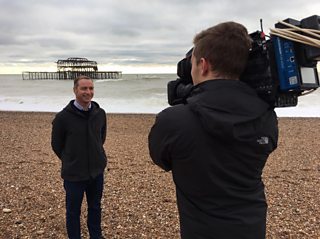
I went for the BBC’s Production Apprentice Scheme in 2016 and - after 6 interviews and out of 4,000 people who applied - I was extremely fortunate to be one of the 34 selected on the wider scheme, with a remit to learn how to be a shoot/edit for BBC News, along with 3 others.
To now actually work in Newsgathering Operations - the department that provides all the technical facilities and expertise for BBC News – was something which took a while to comprehend. My year’s apprenticeship was intense, mixing 80% on-the-job training with 20% college work, but I was attached to an excellent mentor who pushed me and taught me how camerawork and editing works in news. Tony, my mentor, who’s been doing the job for over 30 years and has done every shoot in any environment you could possibly imagine. Safe to say, the training and support I got was first-class – way beyond what a university could ever give me.
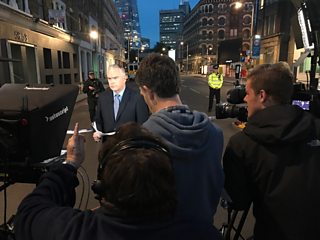
The next 9 months saw me work on everything from Wimbledon, to the party-political conferences, to court cases, to the French Elections in Paris – each time being pushed a little bit more. It was at the latter deployment where I did my first entire News at Ten as single camera with Huw Edwards on the night President Macron got elected - for an entire 30 minutes - going out to 7 million people on a Sunday night on BBC One. Again, Tony and my other supportive colleagues were there making sure it all went well – which gladly it did!