Telling Roald Dahl’s story in a radio drama (with 64 characters) was a labour of love

Helen Perry
BBC radio drama producer @bellaperry
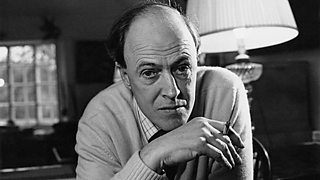
What better way to commemorate a born storyteller than by telling his own fascinating story? That was my opening gambit to BBC Radio 4 as I asked them to commission dramatisations of Roald Dahl’s memoirs to celebrate this centenary year of his birth. Luckily for me they agreed.
Working on these radio adaptations (his childhood memoir Boy and Going Solo, about his early adult adventures) has been a passion project from start to finish. As a child I struggled with my reading. If it hadn’t been for the glorious books of Roald Dahl I may not have persevered. And who knows where I would have ended up then – certainly not producing and directing radio drama for the BBC.
So I owe this great writer a great debt. That was my main focus when approaching the project: how to keep the work as faithful as possible to the books themselves; how to capture that wicked, ‘twinkle in the eye’ irreverent Dahl spirit. And the need to stay true to Dahl was even more pertinent given that they were tales from his own life and childhood. It felt like a huge responsibility.
The most important element was finding the perfect writer. I have to say that working with Lucy Catherine was a gift. An award-winning writer for stage, screen and radio, who’d previously adapted Roald Dahl’s The Witches for Radio 4, Lucy was my first choice. Unsurprisingly she loved the books too. And with great skill, she was able to tune into the voice of Dahl, to respect the boundaries of his world, whilst remaining bold and imaginative with the source material.
Our biggest challenge was the selection process. When the original material is so good how do you choose what to leave in and what to take out? Especially for Boy, which we were adapting into a single 60-minute drama. At least with Going Solo we had two hour-long episodes to play with.
The solution was creating a structure that held these amazing stories together – an older Dahl as narrator, looking back over his youth, making sense of his experiences by re-telling them gave us that structure. It led us to select the stories that not only lent themselves naturally to dramatisation but that also seemed to inform Dahl’s personal development – events that would turn him into the man and the much-loved storyteller he would later become.
What also became increasingly apparent across all three episodes was the loving bond between Dahl and his mother. It’s their relationship that provides the emotional backbone to the drama, so we focused in on those moments and peppered the plays with his letters home.
Both books are littered with truly memorable and often bonkers individuals. You can see the roots of many of the unforgettable characters Dahl would later fictionalise in these early real life experiences. But there are so many of them!
In our adaptation there were 64 individual characters across the three episodes. In these budget-constrained times, casting was a terrifying prospect…or at least it would have been if we hadn’t had access to the BBC Radio Drama Company. The RDC members are the most incredible bunch of actors – just a handful of whom were able to populate our dramas by not only doubling and trebling up on parts but on a couple of occasions playing up to eight characters, manipulating their voices and characterising the roles so skillfully.
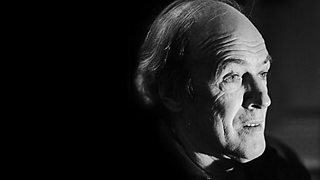
Then of course there was Dahl himself. Who could play the writer’s older voice? Patrick Malahide of course, an actor with such emotional intelligence and precision. Patrick arrived at our studio having studied the rhythms of Dahl’s speech. As a drama director you don’t often get to sit back and enjoy being read to, but our day recording narrations with Patrick was a joy.
The rest of the recording schedule was a little bit more chaotic, accommodating what seemed like thousands of short sharp scenes. We had to jump from episode to episode in order to make the most efficient use of our time and the acting talent available. And indeed, in true Dahl style, we were forever swinging from the comic to the tragic, the gruesome to the heartfelt.
It was exhausting. But everyone was so committed to bringing these dramas to life – not least of all John Heffernan as our younger Dahl, and our four new-to-radio child actors – so it was all done with great enthusiasm and energy.
At BBC Wales in Cardiff we record radio dramas with very few effects in studio. The bulk of the sound is put on in post-production. This allows for a more colourful soundscape – the effects ‘pop’ out in a way they wouldn’t if they were all created naturally. The genius behind this is sound designer Nigel Lewis who spent an extraordinary amount of time painting in the soundscape across the three plays.
There were so many people involved in this project, who gave it their all because it was Roald Dahl. And I think that’s testament to the enduring quality of Dahl’s work. It continues to, and I think forever will, capture the hearts, minds and imaginations of all those who read the stories So I hope our end product is a fitting tribute in his centenary year. I know the dedication put in to the production process certainly was.
Listen to Boy and Going Solo on BBC iPlayer.
Fictional story, real emotions: How The Archers’ audience was shaken and stirred