‘Shakespeare – as you like it’: The making of a season

Keeren Flora
Digital content researcher, BBC Academy

What goes into curating a season of broadcast programmes and events? And what should a themed season aim to achieve for a broad audience? I talked to Jonty Claypole, director of BBC Arts, about mounting the ambitious BBC Shakespeare Festival:
Jonty Claypole is just back from the Hay Festival, where the likes of Simon Schama, Maxine Peake, Russell T Davies and Germaine Greer have been holding court with their insights into Shakespeare’s work and influence.
Highlights like those from the Shakespeare anniversary celebrations at Hay are now available on the BBC’s Shakespeare Lives website, and will be for the next six months. Partnership – with the RSC, BFI, Hay and many others – is pretty central to the BBC Shakespeare Festival that Claypole began shaping, as part of the BBC Radio director Helen Boaden’s project steering group, more than a year ago. But it’s just one aspect of what it takes to build a season on this scale.
It’s now six weeks since the BBC kicked off its festival celebrating the 400th anniversary of Shakespeare’s death, with prime-time dramas, BBC Two’s start-studded Shakespeare Live! from the RSC in Stratford-upon-Avon, apps designed to help Shakespeare’s most recognised lines engage a new generation, the enticing collaboration entitled The Best Bottoms in the Land and plenty more besides. So what merits a BBC 'season', and how exactly should the ingredients be mixed together?
Clearly, not many historic milestones merit the full Shakespeare treatment. But for the BBC, Claypole says, a season like this is an opportunity for the whole organisation to celebrate something through each of its channels and platforms, targeting tailored content at disparate audiences.
And there should be a “message” at the centre of it – something that is both simple enough to interpret for multiple audiences and ambitious enough to remain distinctive. No small challenge, then.
“We thought hard about what the BBC could do that would be unique. Through the range of our services and the level of reach that the BBC has, we set ourselves the ambition of making Shakespeare irresistible to everyone.”
Not so much a message as a mission for teams across the BBC, and on the face of it a daunting task: delight and satisfy the fans and aficionados; inspire audiences who may have been turned off by Shakespearean language at school; and at the same time introduce the very young to the magic of our greatest writer – all the while aware that some critics will be ready to pounce on anything that could be viewed as ‘dumbing down’ the Bard.
“It’s all in how you tell the story,” Claypole argues. “Shakespeare feels boring and removed and alienating when it’s badly done. If it’s done well it’s easy to follow what’s going on.”
It is widely accepted that Shakespeare wrote some of the most compelling stories ever. So, if packaged correctly, they ought to hold their own with any audience, he reasons.
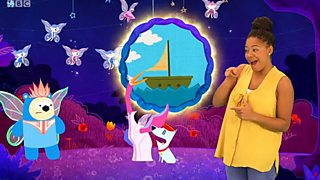
For example, the BBC has interpreted A Midsummer Night’s Dream for two completely different audiences: an animated version by CBeebies’ Magic Hands (above) might engage children in Shakespeare for the first time but the adaptation by Russell T Davies (top image) was aimed squarely at a prime-time BBC One audience.
So you have a collection of great content from across the BBC – but how do you make sure people aren’t turned off by the sheer amount of Shakespeare-themed output?
Claypole acknowledges that this is a danger when curating a season but the answer lies in the length of the project. “As a general rule you want the season to happen in the shortest time frame possible so that it is a short, sharp hit that leaves everyone wanting more.”
He points to the Glastonbury Festival as a great example of short, sharp appeal. Everyone knows it is happening and there is an excitement about who’s playing and who’s headlining. Then it happens in just under a week and it’s gone. People are left wanting more, which is where the BBC iPlayer steps in with its footage from the event.
The main Shakespeare content was scheduled between late April and the end of May, although certain elements will have an “afterlife”, the BBC Arts chief points out, including online, “as all good seasons should have”.
He accepts that scheduling is one of the great challenges of curating a season as meaty as this one. You are asking a huge number of different services and teams who have their own sets of priorities to create time in their broadcast schedules for Shakespeare.

Benedict Cumberbatch stars as Richard III, in BBC Two's The Hollow Crown series.
A second challenge is finding an editorial angle that all the channels can agree on and all the content creators can take something from. There is a balance to be struck, Claypole feels, between having a shared, common, “irresistible” message and enough flexibility for each service to engage with their audience in the way they know best.
On top of that you want it to be ambitious and push at the boundaries of what the BBC has done before, he insists. “By the end of the season you want audiences to know what Shakespeare was about, and that they feel that was reflected across the BBC.”
There was definitely a buzz around Shakespeare Live! from the RSC, not to mention the drama highlights. Around 1.8 million tuned in for A Midsummer Night’s Dream (and that lesbian kiss) on BBC One and the first part of the The Hollow Crown: War of the Roses pulled in more than a million viewers for BBC Two.
It’s too early to assess the success of the whole season, Claypole says. But I’d guess he’s hoping its Twitter bio, ‘Shakespeare - as you like it’, will be a legacy for at least some of the audiences the festival has reached.
Find out what’s in the BBC Shakespeare Festival 2016
The BBC Academy’s own Shakespeare-related content includes:
Is this a smiley face I see before me – or is #ShakespeareMe a new way to discover the Bard?
Directing and producing The Hollow Crown: Wars of the Roses
Shakespeare’s The Hollow Crown: Costumes
Doctors meets Shakespeare: Peter Lloyd talks to Joe Godwin
Making the most of a local radio audience: Shakespeare Street
Making Shakespeare archives interactive: The value of collaboration